Bulk Asian Sauces Supplier for Foodservice and Importers
- Share
- publisher
- Yinghok Food & Beverage Wholesale Manufacturer
- Issue Time
- Aug 21,2026
Summary
A practical guide for foodservice distributors, importers, restaurant groups, central kitchens and wholesalers evaluating bulk Asian sauces suppliers: when bulk makes commercial sense, building a Japanese/Korean/Asian sauce portfolio, bulk packaging and container planning, mixed-SKU palletization, MOQ and landed-cost economics, quality documentation, first-shipment readiness, templates and FAQs.
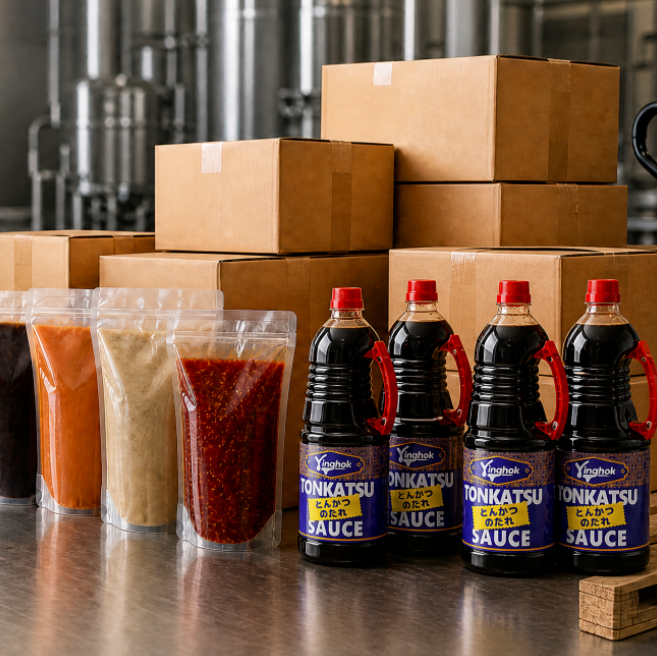

This guide is written for foodservice distributors, importers, restaurant groups, central kitchens and wholesalers who are evaluating bulk Asian sauces suppliers. It helps procurement, operations and category managers decide when to buy sauces in bulk, how to design a practical portfolio across Japanese, Korean and broader Asian sauce categories, and how to plan packaging, container logistics, landed economics, quality documentation and replenishment. Practical templates, a supplier scorecard and an onboarding checklist are included so you can move from commercial evaluation to a first shipment with clear criteria.
Yinghok provides research, customization and production of Asian-style sauces and seasonings and offers OEM/ODM and wholesale solutions. Yinghok also describes foodservice packaging and customized condiment solutions for sushi, barbecue and ramen contexts; use the links at the end to review capabilities and request support.
When Bulk Asian Sauces Make Commercial Sense
Before committing to bulk purchasing, run a structured commercial-sense test. Bulk formats reduce per-unit packaging cost and handling frequency but introduce inventory, storage, dispensing and quality-control requirements. Use the following decision points.
High and predictable throughput supports bulk: permanent menu items, staples for central kitchens, or distributor SKUs with steady resupply.
If weekly or monthly demand is volatile or highly seasonal, smaller, mixed SKUs and call-off models may lower working capital and waste risk.
Sauces used as primary production inputs (e.g., ramen base, katsu sauce, sushi tare) or high-volume condiments are better candidates for bulk.
For complex specialist finishes or menu limited items, retail-style pouches or portion packs may be preferable.
Do warehouses and kitchens have appropriate cool/dry storage, shelving and handling equipment for pails, drums, bag-in-box or full-container cartons?
Dispensing systems (pumps, in-line mixers, portion-control dispensers) must match the chosen bulk format to ensure accuracy, hygiene and labor efficiency.
Bulk reduces repetitive case-handling but requires staff trained in bulk opening, sanitation, transfer between containers (if any) and first-in/first-out (FIFO) discipline.
Consider labor cost savings vs. additional QA or sampling workload.
Suppliers with reliable lead times, transparent production schedules and the ability to support call-offs or staggered delivery minimize stockouts and overstock risk.
If lead times are long or variable, maintain higher safety stock or use split shipments.
Importers must ensure labeling, claims, and documentation meet destination requirements (allergen statements, nutrition facts, ingredient declarations, permitted additives). Confirm with your local regulator and supplier early.
When the combination of steady demand, storage/dispensing readiness, and supplier reliability exists, bulk purchasing can lower unit costs, reduce inbound handling complexity and improve production continuity. When those conditions are weak, consider hybrid strategies (bulk for staples; smaller formats for niche SKUs).
Selecting a Portfolio for Foodservice
Designing a practical portfolio across Japanese, Korean and broader Asian sauce categories requires mapping menu use-cases to SKU types and then rationalizing SKUs for operations and distribution. A useful starting point is reviewing the product categories inside Yinghok's Custom Asian Cooking Sauces range, which spans ramen bases, noodle, rice bowl, meat and BBQ, salad and kimchi, and simmering sauce solutions.
- Sushi and nigiri: sushi tare, sweet soy blends, ponzu-type dipping sauces, wasabi-infused dressings.
- Ramen and noodle bases: concentrated tare, shio/shoyu/porkbone-flavor finishing sauces, soup base concentrates and finishing oils.
- Barbecue and grilling: Korean-style gochujang marinades, yakiniku sauces, Korean BBQ finishing glazes, tare for yakitori.
- Marinades and finishes: teriyaki glazes, bulgogi marinades, hoisin-based glazes and sticky finishing sauces for wok/charcoal.
- Dipping sauces and condiments: dumpling sauces, sweet-chili and vinegar-based dipping blends, sesame dressings.
- Cooking sauces and braising: soy-based cooking sauces, oyster-flavored sauces, stir-fry concentrates.
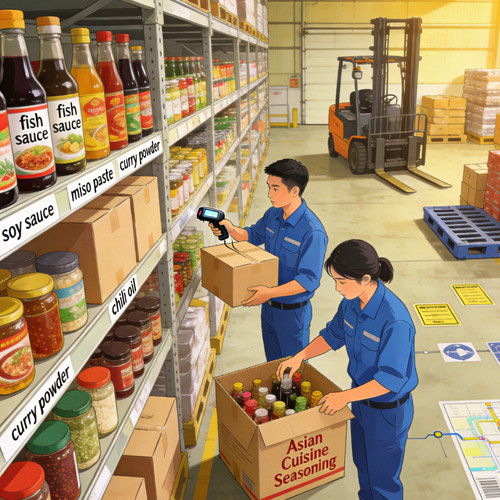
Hero SKUs: a small set of high-velocity sauces that serve multiple applications across menus (e.g., a versatile shoyu-based sauce, a gochujang marinade, a sweet tare for grilling).
Complementary SKUs: targeted flavors that extend menu creativity—specialty glazes, limited-time regional flavors, or signature restaurant blends.
Retail vs foodservice fit: retail SKUs often emphasize branding, consumer portion sizes and shelf-ready packaging. Foodservice SKUs prioritize dispensing efficiency, concentrate options, and clean-labelled formulations appropriate for operator use. Keep retail packaging separate from bulk foodservice specifications.
- Volume threshold: rank SKUs by monthly consumption; consolidate low-volume similar SKUs into a single flexible blend where possible.
- Cross-application utility: prefer blends usable across multiple menu items to reduce SKUs.
- Production/labeling complexity: minimize SKUs that require unique processing or allergen statements unless justified by margin or strategic value.
Note: The product categories above are examples to guide portfolio design. They are distinct from any confirmed current Yinghok SKUs; consult Yinghok's product index for specific products and categories.
Packaging and Container Planning
Bulk packaging decisions drive hygiene, dispensing efficiency, waste and landed cost. This section covers common bulk foodservice formats and container planning considerations. Yinghok's foodservice packaging solutions can help you align formats to your dispensing equipment and operations.
- Jugs (polyethylene or PET): Easy-pour, pump-ready necks and good for lower-viscosity sauces. Often used for back-of-house squeeze or pump dispensing.
- Pouches (stand-up pouches, spouted pouches): Lower carton weight and good for flex-space storage; require compatibility checks with existing dispensers.
- Bag-in-box (BIB): Hygienic, low-oxygen option for high-throughput sauces; compatible with pump-and-dispenser systems commonly used in kitchens and front-of-house.
- Pails: Rigid, reusable or recyclable pails for thicker sauces and glazes. Often used where transfer to kettles or kettles with pump heads is routine.
- Drums/IBC: For very high-volume processors or central kitchens; require appropriate dispensing and transfer equipment.
- Bulk concentrates: Paste or concentrate forms designed to be reconstituted on-site; reduce freight cost per flavour unit but require water and mixing controls.
- Portion packs and refill systems: Single-serve sachets or refill cartridges for front-of-house; useful for chains needing consistent portion control and hygiene.
- PPE and sanitation: Operators must have SOPs for opening, connecting pumps, and changeover. Control microbial risk by training staff and verifying supplier sanitation reports.
- Pump/dispenser compatibility: Confirm pump inlet sizes, tubing compatibility and pump displacement volumes. Some dispensers require specific bag/coupling designs.
- Opening/in-use procedures: Ensure the supplier's opening instructions match back-of-house workflows (e.g., quick-connect spouts, venting).
- Storage: Verify ambient or refrigerated requirements for opened and unopened product. Label storage requirements clearly on pallets and cases.
- Carton/pallet and waste: Consider secondary packaging for transit protection and compatibility with automated palletizers. Plan for returnable/recyclable packaging and waste handling.
Ask About Foodservice Packaging and Container Planning — use supplier consultation to align formats with your dispensing equipment and operations. (contact us)
Container planning should be treated as a logistics engineering exercise, not an afterthought.
Define case count per SKU to optimize pallet stability and avoid partial-pallet chaos at receiving.
Work with suppliers to agree on pallet patterns that maximize cube efficiency while protecting fragile containers.
Consider how your chosen formats stack in a truck or container. Bulk pails and drums may reduce cube efficiency compared to nested cartons but can improve unit cost.
Temperature-sensitive sauces may require reefer capacity, affecting freight lanes and container type selection.
Assess thermal sensitivity and abuse tolerance for transit and local delivery. Some sauces separate or crystallize at low temperatures; others are heat-sensitive.
Protect against tipping, punctures and leakage with appropriate strapping, corner boards and pallet overwrap.
Harmonize labeling and case marking to meet destination customs requirements and avoid delays.
Schedule pre-alerts and electronic advance shipment notifications (ASNs) for smoother receiving.
Pre-agree acceptance criteria with the supplier for damages, shortages and claims.
Ensure your warehouse can handle bulk package weights and has product-specific storage plans (e.g., racking vs floor stacking).
Mixed-SKU Orders and Palletization
Mixed-SKU orders create complexity that impacts warehouse labor, order-picking accuracy and container utilization. Address these factors early to avoid costly inefficiencies.
For importers: grouping high-turn SKUs in a high-utilization container and scheduling less-frequent SKUs on smaller consolidation shipments can balance cube efficiency and inventory risk.
For distributors: plan assortments by route density—stock high-velocity hero SKUs on primary pallets and cross-dock or allocate less-frequent SKUs separately.
Mixed SKUs increase carton-picking complexity. Use consistent case dimensions where possible to streamline pick-face layouts and reduce errors.
Standardize pack counts and case barcoding to speed scanning and receiving.
Evaluate whether mixed-SKU pallets increase air or dead space in containers. Use pallet-building software or logistics partners to simulate container configurations.
Consider split shipments or LCL/LTL strategies for slow-moving SKUs to avoid tying up container space.
Mixed pallets with varied weights and stiffness can create tipping hazards; ensure heavier SKUs are at the base and lighter or fragile items on top.
Maintain clear case-level traceability (lot codes and COAs) on mixed pallets to simplify recall or QA activities.
MOQ, Cost and Landed Economics
MOQ and unit price are only part of the landed-cost story. Develop a total-cost model that captures production and commercial realities.
- Ingredient and formula costs: raw-material volatility (soy, sugar, spices, chile pastes) can shift unit economics; consider formula hedging or fixed-price windows with suppliers.
- Packaging purchase units: the cost per unit for drums/pails vs cartons vs BIB depends on supplier sourcing; negotiate packaging return or recycling programs.
- Setup and changeover: per-SKU line changeovers create costs (sanitation, downtime, testing). Reduce them by consolidating SKUs or increasing batch sizes where feasible.
- QA testing and samples: initial sample development and validation are necessary for foodservice specifications; allocate budget for sensory panels and lab testing.
- Freight, duties and brokerage: include origin freight to port, container FCL/LCL choices, import duties, customs brokerage fees and inland haulage in landed calculations.
- Storage and financing: holding bulk product increases warehousing costs and working capital needs.
- Waste and obsolescence: product not used before best-before or product reformulation can create write-offs.
A lower per-kilo price on a large MOQ may force excess inventory, increasing storage, capital costs and risk of spoilage.
Mixed-SKU complexity or high frequency of changeovers may negate per-unit savings through increased labor and downtime.
Balance unit price against hidden costs—freight inefficiencies, higher duty brackets for certain HS classifications, and shelf-life-driven waste.
- Flexible MOQ or tiered pricing to allow staged commitments.
- Joint forecasting and call-off agreements to smooth production planning.
- Shared packaging return programs or cooperative freight optimization.
- Co-funded testing or market development contributions for new product introductions.
Discuss MOQ, Landed Cost and Replenishment — request a commercial review to map landed cost drivers and negotiation options. (contact us)
Quality, Documents and Replenishment
Food safety, regulatory compliance and supply continuity are non-negotiable in bulk supply. This section covers required documents and practical replenishment approaches. When partnering with a foodservice sauce supplier, confirm the documentation and traceability support they can provide for your destination market.
- Product specification (spec sheet): ingredient list, processing method, physical/chemical attributes (pH, Brix, viscosity where relevant), allergens and storage instructions.
- Nutrition declaration and allergen statement: formatted for destination market requirements.
- Certificate of Analysis (COA): per-lot or per-shipment COAs demonstrating key attributes and microbial criteria as agreed.
- Lot traceability and chain-of-custody: supplier must provide lot numbers and production dates to enable recalls or targeted withdrawals.
- Shelf-life basis and storage conditions: defined open and unopened shelf life, and validated storage temperatures.
- Claims and labeling compliance: verify permitted claims (e.g., “natural,” “no added MSG”) with your regulatory advisor.
- Certificates where relevant: certificates for organic, halal, kosher, or other claims should be issued by accredited bodies when used.
- Change control and nonconformance: documented change-control procedures for formulation, packaging or process changes; defined CAPA and complaint-handling workflows.
Use general regulatory resources such as the FDA Food section or Codex General Principles of Food Hygiene for baseline expectations on food safety and labelling. Regulatory specifics depend on destination markets, so engage import compliance early.
A supplier scorecard converts qualitative impressions into objective decisions. Use it during supplier qualification and ongoing performance reviews.
Supplier Scorecard (example rubric — score 1–5)
- Product quality consistency (sensory and lab results)
- Documentation completeness and timeliness (specs, COAs, certificates)
- Packaging match to specification and integrity on arrival
- On-time delivery performance and lead-time accuracy
- Communication and responsiveness
- Flexibility for MOQ, scheduling and change requests
- Food safety and traceability processes
- Commercial competitiveness (total landed cost transparency)
Scoring guidance: 5 = exemplary; 3 = acceptable; 1 = requires immediate improvement. Use weighted scoring to reflect priorities (e.g., food safety higher weight).
Replenishment must be planned cooperatively between buyer and supplier to manage lead times, safety stock and SKU complexity.
Reorder planning worksheet questions
- What is average weekly demand and demand variability for each SKU?
- What is the confirmed supplier lead time for production and shipping (time to door for importers)?
- What is the required safety stock in days or weeks to protect against supplier or transport variability?
- Are there seasonal peaks that require temporary stock build or alternative suppliers?
- Will you use a reorder point system, min/max bins, or forecast-driven call-offs?
- How will quality release be handled on receipt (sampling frequency, acceptance criteria)?
- Are there contract terms for expedited shipping or split shipments to manage shortfalls?
- What are the triggers for initiating a new production run (e.g., percentage of remaining stock)?
Include these answers in your ERP or ordering system so triggers and alerts are automated.
Implementation Notes and Best Practices
- Pilot in controlled rollout: Start hero SKUs in one DC or group of stores to validate dispensing and training before scaling.
- Invest in training and SOP documentation: Proper opening, pump attachment, sanitation and FIFO practices reduce waste and quality incidents.
- Use lot-level traceability from the beginning: It shortens incident resolution times and reduces recall scope.
- Regularly review SKU rationalization: Quarterly reviews of velocity and waste will keep SKU lists healthy.
- Build collaborative forecasting: Share POS or kitchen usage data with the supplier to enable better production planning, which can reduce lead-time variability and hold costs.
How Yinghok Can Support Bulk Asian Sauce Programs
Review product categories and examples on Yinghok’s product index.
Learn about foodservice packaging and condiment solutions on Yinghok’s foodservice page.
Discuss sample development and customization steps via Yinghok’s customization page.
Request a commercial conversation or quotation through Yinghok’s contact page.
FAQ (exactly 3 concise Q&A)
Q1: What are the most relevant bulk formats for high-volume foodservice use?
A1: Common formats are bag-in-box, pails, jugs, drums and bulk concentrates; selection depends on viscosity, dispensing equipment and storage capacity. Validate pump and dispenser compatibility before committing.
Q2: How should I evaluate MOQ vs total landed cost?
A2: Model total landed cost including production setup, packaging units, freight, duties, inland haulage, storage, waste and financing. A lower unit price can be offset by higher inventory carrying costs or waste.
Q3: What documentation should I require from a bulk sauce supplier before first shipment?
A3: Obtain the product specification, allergen and nutrition declarations, Certificate of Analysis (COA), lot traceability info, shelf-life/storage instructions and any certificates supporting claims (e.g., halal/kosher) as applicable.
If you’d like, our team can build a customized bulk sourcing assessment for your SKUs, run a landed-cost model and prepare a supplier scorecard template tailored to your menu and logistics network.
Request a Bulk Sauce Portfolio Review or Discuss MOQ, Landed Cost and Replenishment — contact Yinghok for quotation and technical discussion.