How Cooking Sake Improves Umami and Removes Odors: A Technical Guide for Food Manufacturer
- Share
- publisher
- Yinghok Food & Beverage Wholesale Manufacturer
- Issue Time
- Sep 23,2026
Summary
A technical B2B guide to how cooking sake improves umami and removes odors in commercial food production: the umami mechanism, deodorising chemistry, key specification parameters, dosage and timing, applications across sauces and ready meals, sourcing checklists and FAQs. Written for food manufacturers, sauce producers and Japanese food brands sourcing custom Japanese seasonings.
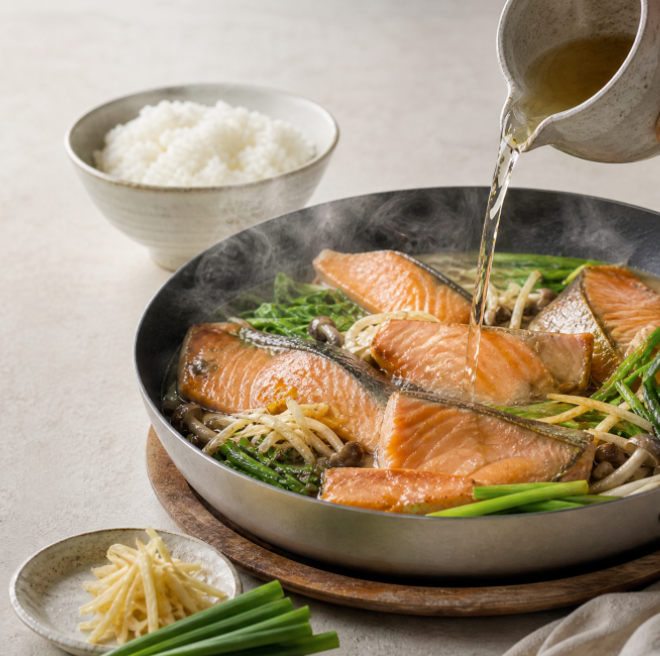

How Cooking Sake Improves Umami and Removes Odors: A Technical Guide for Food Manufacturers
Cooking sake earns its place in a commercial formulation for two functional reasons rather than one. It suppresses the volatile compounds that read as fishy, gamey or "leftover", and it simultaneously increases the perceived savoury depth of the finished product. For a food manufacturer, both effects are measurable, both are repeatable, and both depend far more on the specification of the cooking sake being used than on the volume added.
This guide explains the mechanisms behind umami enhancement and odour removal in cooking sake, and translates them into the formulation, dosage and sourcing decisions that matter when you buy Japanese cooking sake in bulk for sauces, ready meals, marinades and noodle bases.
What Exactly Is Cooking Sake?

Cooking sake — ryori-shu in Japanese — is a rice-based seasoning produced by fermenting rice, rice koji and water, then adjusting the alcohol and solids profile for culinary use. It sits in the same family as mirin and rice vinegar, but it is formulated for cooking performance, not for drinking.
That distinction matters commercially. Drinking sake is designed for aroma and mouthfeel in a glass. Cooking sake for food manufacturing is designed for three things a production line actually needs: consistent salt and acid levels, predictable alcohol content, and a flavour profile that survives heat, chilling and retort.
Fermented rice base
Rice, koji and water create free amino acids, organic acids and a small amount of residual sugar — the raw material for umami and aroma.
Controlled alcohol
Typically 13–15% ABV for standard cooking sake. Alcohol is the carrier that pulls aroma compounds out of ingredients and into the sauce.
Added salt
Most commercial cooking sake is salted, both for flavour and, historically, to keep it legally distinct from beverage alcohol.
How the Umami Mechanism Works

Umami in a formulation is rarely the work of a single ingredient. It comes from glutamate, inosinate and guanylate, and from the way they interact. Cooking sake contributes to that system in three ways.
Free amino acids from rice fermentation
During koji fermentation, rice proteins are broken down into peptides and free amino acids, including glutamic acid. That is the same family of compounds responsible for the savoury note in soy sauce and miso, arriving here in a gentler, sweeter carrier.
Alcohol as an aroma and flavour extractant
Flavour compounds in fish, meat and vegetables are often fat-soluble or bound inside cell structures. A low concentration of ethanol helps release and dissolve them into the cooking liquid, so more of the ingredient's own savoury character reaches the final product instead of being left behind or volatilised away.
Interaction with salt and other umami sources
The salt already present in cooking sake increases perceived savouriness, and when a formulation also carries soy sauce, miso, yeast extract or hydrolysed vegetable protein, the combined glutamate–nucleotide effect is stronger than the sum of the parts.
How Cooking Sake Removes Odors
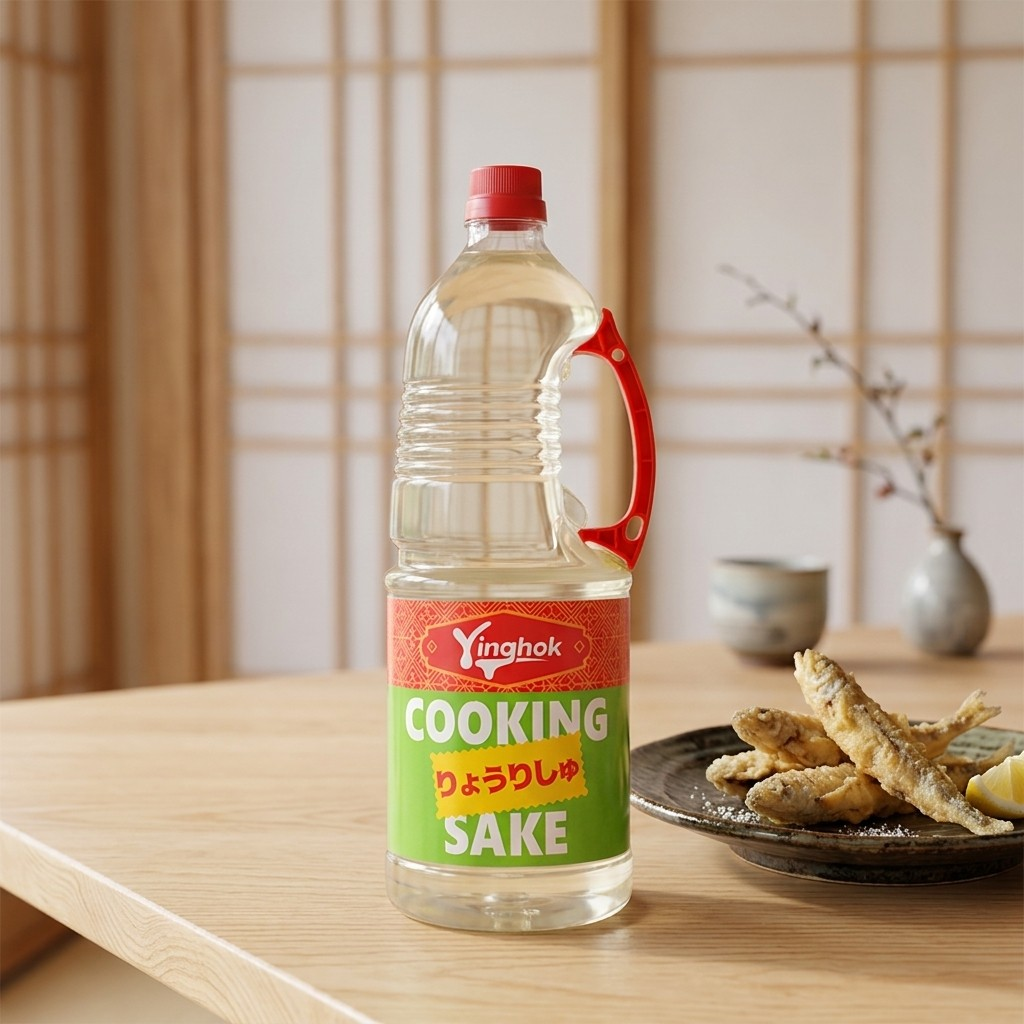
Odour removal in cooking is chemistry, not masking. Three mechanisms are at work, and each one is relevant to industrial production.
Deodorising volatile amines and sulphur compounds
Fishy and gamey notes come largely from trimethylamine and short-chain sulphur compounds. These are volatile, fat-associated molecules, and alcohol is an effective solvent for them. By dissolving and gently carrying these compounds off during heating, cooking sake reduces the intensity of the note rather than covering it with spice or sugar.
Enzymatic and heat-driven reactions
As the product is heated, amino acids and sugars from the sake participate in Maillard-type reactions. These generate new roasted, savoury aromas that compete perceptually with the off-note, pushing the profile toward "cooked and caramelised" instead of "raw".
The dose and timing effect
Odour suppression depends on contact time. Sake added into a cold marinade behaves differently from sake added at the end of a cook. In a manufacturing process this translates directly into a process step: adding cooking sake at the start of simmering gives more contact time than dosing it into a finished, cooled sauce.
Practical benchmark
Common starting dosages in commercial formulations sit between 1% and 5% of the product weight, with marinades at the higher end and finished sauces at the lower end. Because most cooking sake carries salt, the salt contribution must be deducted from the rest of the recipe.
Key Technical Parameters Buyers Should Specify
Two cooking sakes with the same name on a label can behave very differently on a line. These are the parameters worth writing into a specification.
| Parameter | Why it matters | Typical range |
|---|---|---|
| Alcohol content | Drives extraction, helps preservation, creates labelling obligations in some markets | 13–15% ABV standard; alcohol-reduced versions available |
| Salt content | Directly affects the sodium declaration and the rest of the formula | 1–2% typical in salted cooking sake |
| Amino acid / nitrogen level | Indicates how much umami the base can contribute | Higher is not automatically better; match to target profile |
| Acidity | Shapes the finish and interacts with other acids in the recipe | Low, but should be consistent batch to batch |
| Colour | Affects appearance in light sauces, dressings and clear broths | Pale to light amber |
| Sweetness | Determines how much mirin or sugar is still needed | Low to moderate; spec it, do not assume |
Applications Across Commercial Food Manufacturing
Cooking sake is not a single-application ingredient. The same functional profile serves several product categories, and the same base can often be specified for all of them.
Marinades and glazes
Carries seasoning into the protein and reduces the raw note before cooking. Common in teriyaki, yakitori and grilled product lines.
Simmering and braising
Added early for maximum contact time. The classic use case for deodorising and building depth in braised and stewed products.
Ramen and noodle bases
Layered into the soup base for umami and for the aroma that reads as "properly cooked broth" rather than rehydrated concentrate.
Ready meals
Used to stabilise flavour through chilling and reheating, where volatile aromas are otherwise lost.
Formulation Guidelines for Production Teams
A workable approach when introducing cooking sake into an existing recipe.
- Establish the baselineBench the current product without sake and record the off-note intensity and savoury score with a trained panel.
- Fix the salt budget firstCalculate the sodium that the sake will add, then rebalance salt elsewhere in the formula before tasting.
- Run a dosage ladderTest 1%, 2%, 3% and 5% additions. The optimum is usually lower than expected, and overshooting flattens the profile.
- Change one process variable at a timeRe-run the ladder with sake added at the start of cooking and again at the end, and compare the headspace aroma.
- Validate through the real processRetort, freeze and reheat samples before accepting the formulation; behaviour in a benchtop pan is not proof of behaviour on a line.
- Lock the specificationTurn alcohol, salt, acidity and colour into written limits so the next batch behaves like the approved sample.
Why Supplier Specification Matters More Than Brand
The gap between a good cooking sake and a poor one is usually not the concept, it is the consistency. A supplier that can hold alcohol, salt and acidity within tight limits across batches saves a manufacturer from re-validating every delivery.
Yinghok manufactures custom cooking sake series for restaurant groups, foodservice distributors, sauce producers and retail brands, with OEM, ODM and private label options. The cooking sake range includes Junmai Ryori Shu, low-alcohol cooking sake and aromatic cooking sake, and buyers can specify alcohol level, salt content, aroma intensity, colour and packaging format before a first production run.
For manufacturers building a full Japanese seasoning toolkit, the companion categories are worth reviewing alongside cooking sake: custom mirin series for sweetness and glaze, custom vinegar series for acidity and sushi applications, and the wider custom Japanese seasonings range.
Quality, Compliance and Batch Consistency
Ingredient functionality is only useful if it is documented and repeatable. These are the practical checkpoints for any bulk cooking sake purchase.
Written specification
Alcohol, salt, acidity, colour and microbiological limits stated as ranges with tolerances, not as approximations.
Documentation set
Specification sheet, certificate of analysis per batch, allergen statement and, where required, Halal or equivalent certification.
Batch consistency
Ask how much variation is normal across batches and how deviations are flagged before shipment.
Supply reliability
Lead time, minimum order quantity, packaging formats and container loading all affect landed cost as much as unit price does.
Frequently Asked Questions
Is cooking sake the same as mirin?
No. Cooking sake is a rice-fermented seasoning with a savoury, lightly acidic profile and modest sweetness. Mirin is sweeter and contributes gloss and a distinct sweet aroma. Many formulations use both, with sake for depth and deodorising and mirin for sweetness and shine.
Does the alcohol cook off completely?
Not entirely. Some alcohol is retained depending on cooking time, temperature and whether the vessel is covered. For products with alcohol labelling obligations, alcohol-reduced cooking sake specifications are available and should be selected deliberately.
Can cooking sake replace rice wine or white wine in a formulation?
It can substitute functionally for deodorising and umami purposes, but the flavour direction changes. Cooking sake is rounder and less acidic than grape wine, so acidity and sugar often need rebalancing.
What is a realistic minimum order quantity?
It depends on packaging format. Bulk formats below retail size allow smaller first orders for pilot production, while private label retail formats require a higher volume to justify tooling and label setup.
How should bulk cooking sake be stored?
Cool, out of direct light, with the container sealed. Once opened, oxidation and aroma loss begin, so production planning should keep opened stock moving rather than stored long term.
Working With Yinghok on a Cooking Sake Specification
Yinghok is a Japanese seasoning manufacturer with more than two decades of Japanese flavour development and food production experience. For manufacturers and brands that need a cooking sake matched to a specific product, the starting point is a short brief: target application, alcohol and salt limits, packaging format, expected annual volume and destination market.
- OEM and ODM development, including adjustment of alcohol level, salt and aroma intensity
- Private label production with label, pack and carton support
- Bulk supply for sauce manufacturers, ready meal producers and central kitchens
- Batch documentation and quality control records for importer and retailer audits
Request a free sample and OEM/ODM consultation
Related reading on this site: Custom Japanese Seasonings Custom Cooking Sake Series Custom Mirin Series Custom Vinegar Series