Japanese BBQ Sauces: A Buying Guide by Cooking Role
- Share
- Issue Time
- Oct 24,2026
Summary
Japanese BBQ sauces split into grill glazes (teriyaki, yakiniku, yakitori) and table sauces (unagi, tonkatsu, takoyaki, black pepper). This guide explains how to specify viscosity, sugar content and packaging for each role, with MOQ at 30 cartons and a 15-day lead time.
Japanese BBQ Sauces: A Buying Guide by Cooking Role
Quick Answer
Japanese BBQ sauces are not one category. They split by cooking role: grill glazes (teriyaki, yakiniku, yakitori) applied during heat, and table sauces (unagi, tonkatsu, takoyaki, black pepper) applied after plating. Buyers who mix the two get scorched glazes and bland plates. Yinghok produces all seven types, MOQ 30 cartons.
A Japanese grill kitchen runs on sauce, but not on one sauce — and it rarely runs on sauce alone, which is why most operators pair their grill menu with ramen soup bases and noodle sauces from the same supplier. The bottle brushed onto skewers over charcoal is a different product from the bottle poured over a pork cutlet at the pass, and treating them as interchangeable is the single most common sourcing error in this category.
This guide sorts the seven sauce types in Yinghok's meat and BBQ range by cooking role, then walks through what each role demands from a supplier 鈥?heat behaviour, viscosity, pickup weight, and the specification you should hand to a factory.

Why Do Japanese BBQ Sauces Split by Cooking Role?
They split because heat changes them. A sauce applied during cooking has to survive direct heat without burning, while a sauce applied after cooking only has to taste right at room temperature.
Grill glazes carry sugar that is meant to caramelise. Teriyaki, Yakiniku and Yakitori sauces all rely on that reaction 鈥?the sugar in the sauce meets 200 掳C or more, darkens, and forms the glossy surface the cuisine is known for. Apply them too early and they carbonise instead.
Table sauces never meet that heat. Unagi, Tonkatsu, Takoyaki and Black Pepper sauces are finished products, poured or drizzled after the meat leaves the grill or fryer. Their job is acidity, sweetness balance and cling on a plate, not heat tolerance.
A buyer who orders all seven types as if they were one product family will specify the wrong viscosity for half of them. That is where the rework starts.
Which Sauces Belong on the Grill and Which on the Table?
Sort your purchase list into two columns before you talk to any supplier. The split is determined by when the sauce meets the food, not by which cuisine it sounds like it belongs to.
| Sauce | Role | Applied when | Heat exposure |
|---|---|---|---|
| Teriyaki | Grill glaze | Last 30鈥?0 seconds of pan or grill | High, brief |
| Yakiniku | Glaze / dip | Brushed on skewers or used as dip | High, brief |
| Yakitori | Grill glaze | Repeated light brushing over charcoal | High, repeated |
| Unagi | Table sauce | After grilling, over eel and rice | None |
| Tonkatsu | Table sauce | After frying, over cutlet | None |
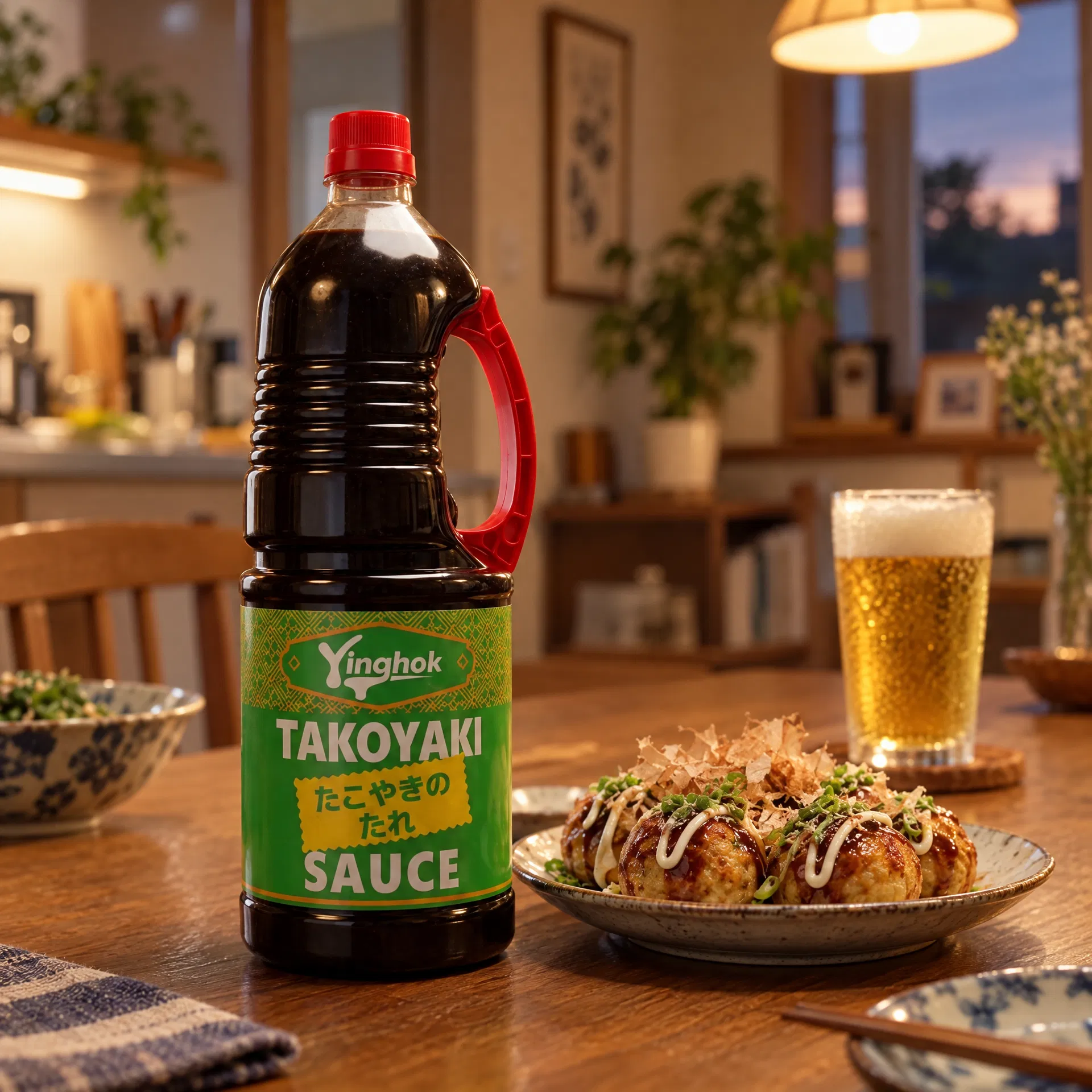
| Takoyaki | Table sauce | After cooking, over takoyaki | None |
| Black Pepper | Table / cooking | Steaks, sizzling plates | Medium |
Yakiniku is the exception worth noting: it functions as both a glaze and a dipping sauce, which is why its viscosity has to sit between the two roles rather than at either extreme.
What Does Each Japanese BBQ Sauce Actually Taste Like?
Each sauce in the range has a defined flavour profile, and buyers should match that profile to the dish rather than to a generic "Japanese" expectation.
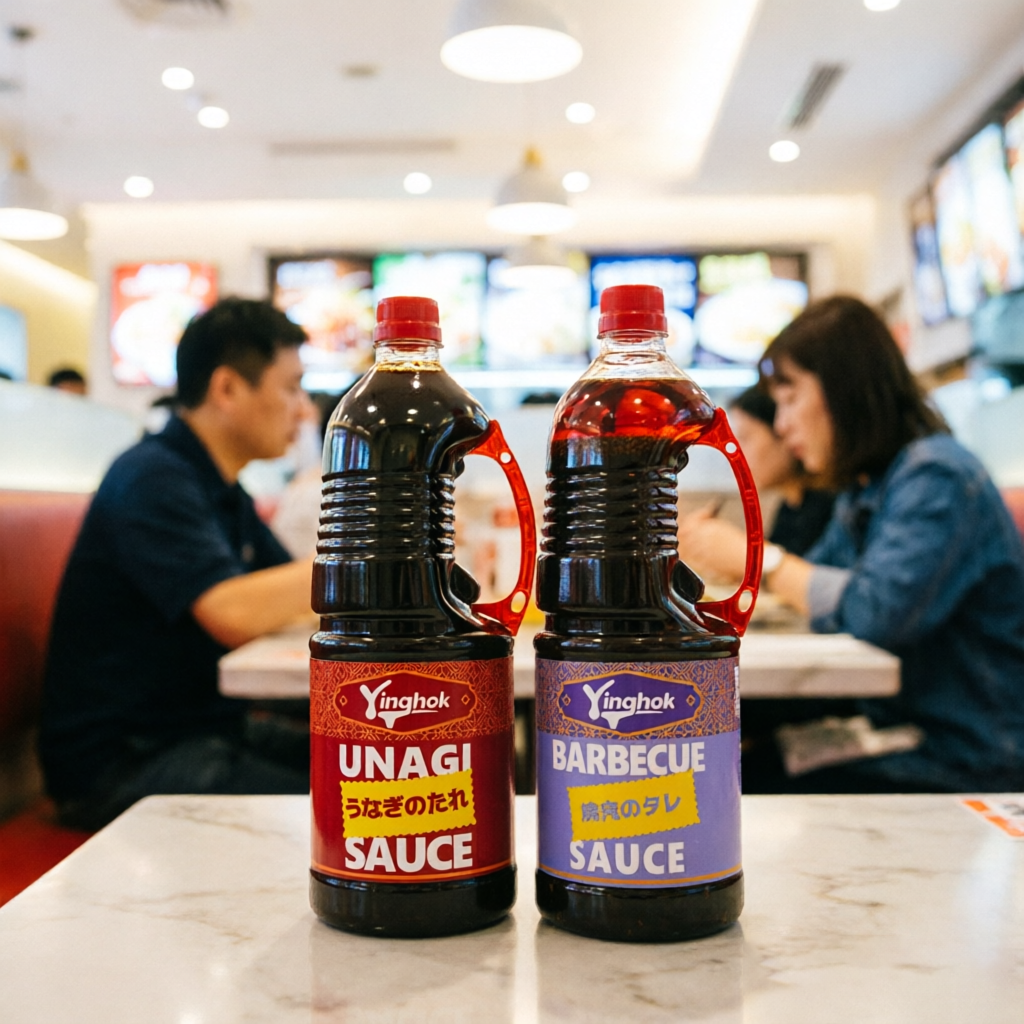
Teriyaki is rich and umami-heavy, built for Japanese grilled chicken, beef and seafood — the same glaze used across the Custom Meat & BBQ Sauces range. Unagi sauce is sweet and savoury, used on grilled eel, sushi and rice bowls. Tonkatsu sauce is sweet and tangy, matched to Japanese pork cutlets.
Black Pepper sauce is peppery and savoury, aimed at steaks, beef and sizzling plates. Yakiniku sauce is umami-rich and aromatic, for grilled meats, BBQ and skewers. Yakitori sauce is rich and umami-forward, for Japanese yakitori and grilled poultry.
Takoyaki sauce is sweet with a strong umami backbone, matched to takoyaki and Japanese street food. Seven sauces, seven profiles 鈥?none of them a substitute for another.
How Should You Specify Viscosity for Glazes and Table Sauces?
Specify viscosity by role, then by application method within that role. Glazes need to cling to a hot surface without running off; table sauces need to coat evenly and hold their line on a plate.
A yakitori glaze brushed repeatedly over charcoal needs to be thin enough to spread in one pass and thick enough not to drip into the fire. A tonkatsu table sauce needs to pour in a controlled ribbon and stay where it lands.
| Role | Typical viscosity | Behaviour target |
|---|---|---|
| Yakitori glaze | Lowest of the glazes | Spreads in one brush pass, minimal drip |
| Teriyaki glaze | Low to medium | Coats evenly in 30鈥?0 seconds of heat |
| Yakiniku | Medium | Holds on skewers, works as dip |
| Takoyaki / Tonkatsu | Medium to thick | Pours in a ribbon, stays on the plate |
| Unagi | Medium to thick | Glosses rice without soaking through |
Treat these as working ranges for a conversation with your factory rather than as fixed product data. Your final targets depend on the dish, the service speed and whether the sauce is portioned in the kitchen or at the table.
What Role Does Sugar Play in Heat Tolerance?
Sugar is the variable that decides whether a glaze caramelises or burns, and it is the number most buyers never specify.
A glaze with high sugar content needs to be applied late and briefly. A glaze with lower sugar and higher soy solids can go on earlier and build flavour over a longer cook without carbonising.
For a chain running high-volume grill stations, this matters more than flavour. A glaze that blackens after 40 seconds forces the kitchen to re-time every station; one that caramelises reliably over two minutes lets the line run at its designed pace.
Ask the factory for the sugar content as a percentage, and ask how it was tested at temperature. A supplier who cannot answer that question has not tested their glaze under commercial conditions.
How Do You Run a Sample Round Across Seven Sauce Types?
Run one sample round per role, not one per sauce. Three samples 鈥?a glaze, a thick table sauce and a medium table sauce 鈥?will expose the factory's control across the whole range faster than seven separate requests.
For the glaze sample, test on your actual grill at your actual heat. Colour development, drip loss and cling after 60 seconds are the three things to record.
For the table sauce samples, test at room temperature and after 20 minutes on a plate, because that is how the customer receives it. A sauce that separates on a plate looks defective even if it tasted correct in the cup.
Record every result as a number against the specification. A sample round that ends in "we liked sample B" has produced an opinion, not a decision.
What MOQ, Lead Time and Packaging Apply to Japanese BBQ Sauces?
MOQ is 30 cartons for standard flavors and 50 cartons for custom formulas, with more favorable terms for long-term partners. For a multi-sauce Japanese menu, that entry point allows a chain to test a full glaze-and-table set without committing to container volume per SKU.
Standard production lead time is 15 days from order confirmation, with a 10-day rush option for existing formulas subject to capacity. Custom wholesale production is typically quoted at 2鈥? weeks and runs faster for standard flavors.
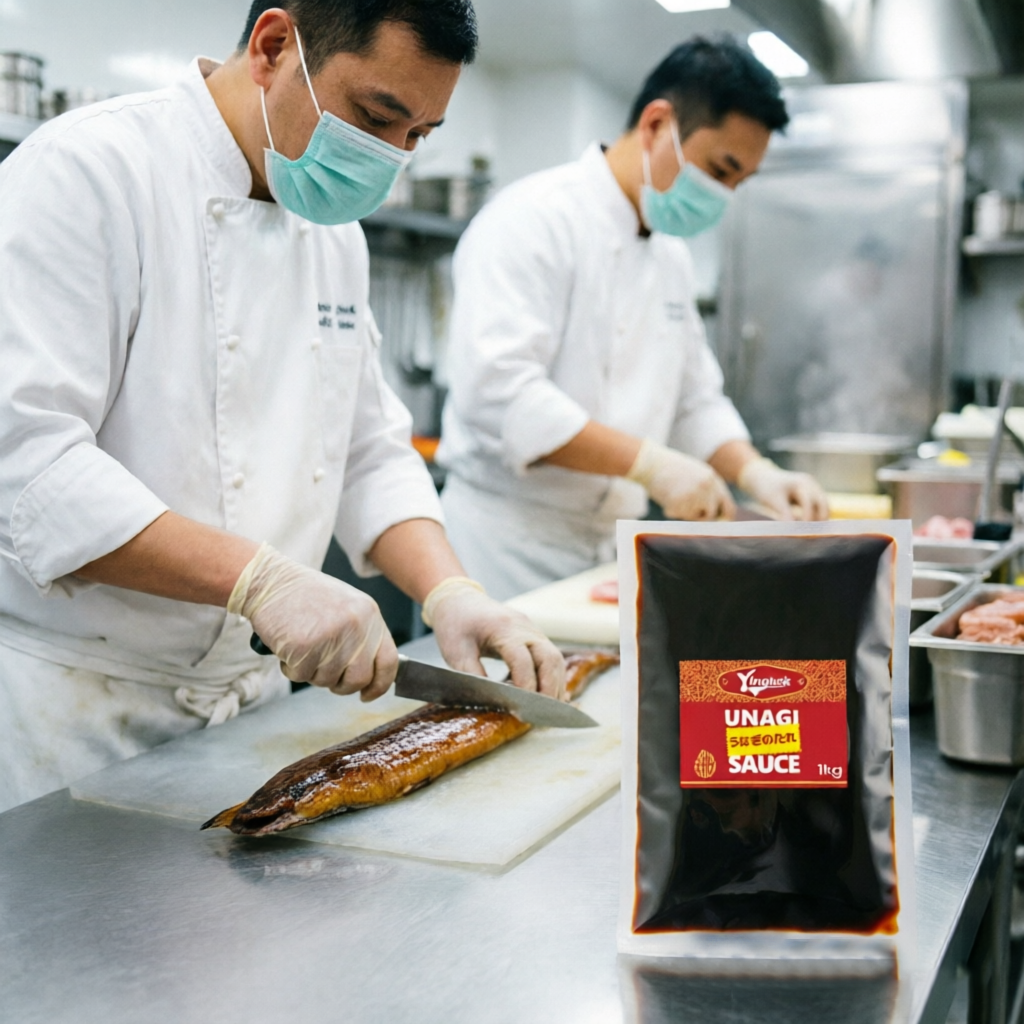
Packaging covers bottles, pouches, bulk foodservice formats and private label. The same packaging options apply across the wider custom Asian cooking sauces line. Match the format to service style: a table sauce decanted into a 300 ml bottle at the pass behaves very differently from the same sauce supplied in a 20 L container and portioned in the kitchen.
Ask About MOQ and Lead Time 鈥?tell us your menu, monthly volume and destination market, and we will return a written schedule with sample and production dates.
Not sure which role your sauce belongs to? Send your menu and we will map each dish to a glaze or a table sauce before any sampling starts. Ask the OEM/ODM team.
Which Certifications Matter for Japanese Sauce Export?
Match the documents to the destination market, not to the longest list on the website. Yinghok's meat and BBQ sauce production operates under a HACCP-based food safety system, with Halal options available for international markets.
Ingredient traceability records and batch quality reports are stated as available. For a distributor supplying multiple restaurant chains, traceability is the document that lets you isolate a batch without recalling an entire SKU.
Nutritional information, safety data sheets and regulatory compliance documentation are also stated as supported. Confirm that these cover your exact formulation rather than a standard base, because the difference surfaces at customs, not at the sample stage.
Why Japanese-Focused Buyers Work With Yinghok
Yinghok, a custom Asian cooking sauce manufacturer operating OEM/ODM production in Dalian and Foshan, covers the full Japanese grill set in one supply relationship 鈥?Teriyaki, Unagi, Tonkatsu, Black Pepper, Yakiniku, Yakitori and Takoyaki.
The practical advantage is formulation control across roles. Because the glazes and the table sauces come from the same factory, viscosity and sugar targets can be tuned as a set rather than negotiated separately with two suppliers that never speak to each other.
Recipe development, flavor matching and regional taste adaptation are supported in-house, so a buyer adjusting sweetness or salt for a specific market does not have to change the supply base to do it. The OEM/ODM development process documents each stage from brief to production.
Send Your Menu and Get a Matched Sauce Set
Start with your menu, not with a product list. Tell the factory which dishes are grilled, which are fried, and which are plated at the table, and the correct role split follows from that.
Then attach your targets: viscosity per role, sugar percentage for the glazes, and the packaging format for each service point. That is a specification a factory can develop against. If your menu also covers rice bowls or salad lines, the same brief can extend to rice bowl sauces and salad and kimchi sauces without opening a second supplier file.
Review the full Custom Meat & BBQ Sauces range before you specify, or read the OEM/ODM development process to see how a formulation moves from brief to production.
Frequently Asked Questions About Japanese BBQ Sauces
What is the difference between a Japanese BBQ glaze and a table sauce?
A glaze is applied during cooking and must survive direct heat; a table sauce is applied after plating and never meets the grill. Teriyaki, yakiniku and yakitori are glazes. Unagi, tonkatsu, takoyaki and black pepper sauces are table sauces. Specifying them as one product family causes scorching on the grill and separation on the plate.
Which Japanese sauce should I use for grilled chicken skewers?
Yakitori sauce is the correct match for grilled poultry skewers, applied in repeated light brushings over charcoal. Teriyaki also works for chicken but goes on later and more briefly, in the final 30–60 seconds. Both are umami-forward, but their sugar levels are formulated for different heat exposure times.
What is the MOQ for Japanese BBQ sauces?
MOQ is 30 cartons for standard flavors and 50 cartons for custom formulas, with more favorable terms for long-term partners. This applies per SKU, so a menu covering several sauce roles can be sampled in stages. Confirm carton counts against your bottle, pouch or bulk container format before ordering.
How long is production and lead time?
Standard production lead time is 15 days from order confirmation, with a 10-day rush option for existing formulas subject to production capacity. Custom wholesale production is typically quoted at 2–3 weeks. Sample development time varies by formula and should be confirmed separately in writing before you set a launch date.
Can viscosity and sugar content be customized per sauce type?
Yes. Customization covers sweetness, spiciness, saltiness, umami intensity, thickness and aroma profile. For glazes, sugar content is the parameter that governs heat tolerance, so specify it as a percentage and test at your own grill temperature. For table sauces, specify viscosity by pour behaviour rather than by an instrument reading alone.
Do you provide free samples before a wholesale order?
Free samples of standard flavors are available on request, and custom sample formulas can be developed before any bulk order is placed. Run the sample round per role rather than per sauce — a glaze, a thick table sauce and a medium table sauce will show how well the factory controls the whole range.
Are the sauces certified for export markets?
Production operates under a HACCP-based food safety system, with Halal options available for international markets. Ingredient traceability records, batch quality reports, nutritional information and safety data sheets are stated as available. Buyers should confirm certificate validity dates and product scope against their destination market requirements.
Related reading
Request a Free Sample & OEM/ODM Consultation or Send Your Sauce Specification 鈥?share your menu, volume and destination country, and we will reply with a matched sauce set plan.