OEM vs. Private Label Sauces: What Is the Difference?
- Share
- Issue Time
- Sep 17,2026
Summary
Learn the differences between OEM and private label sauces, including customization, MOQ, packaging, QC, certification and bulk supply.
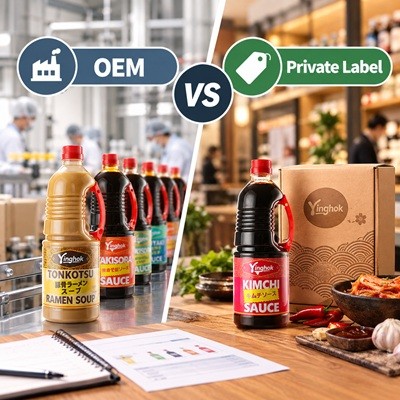
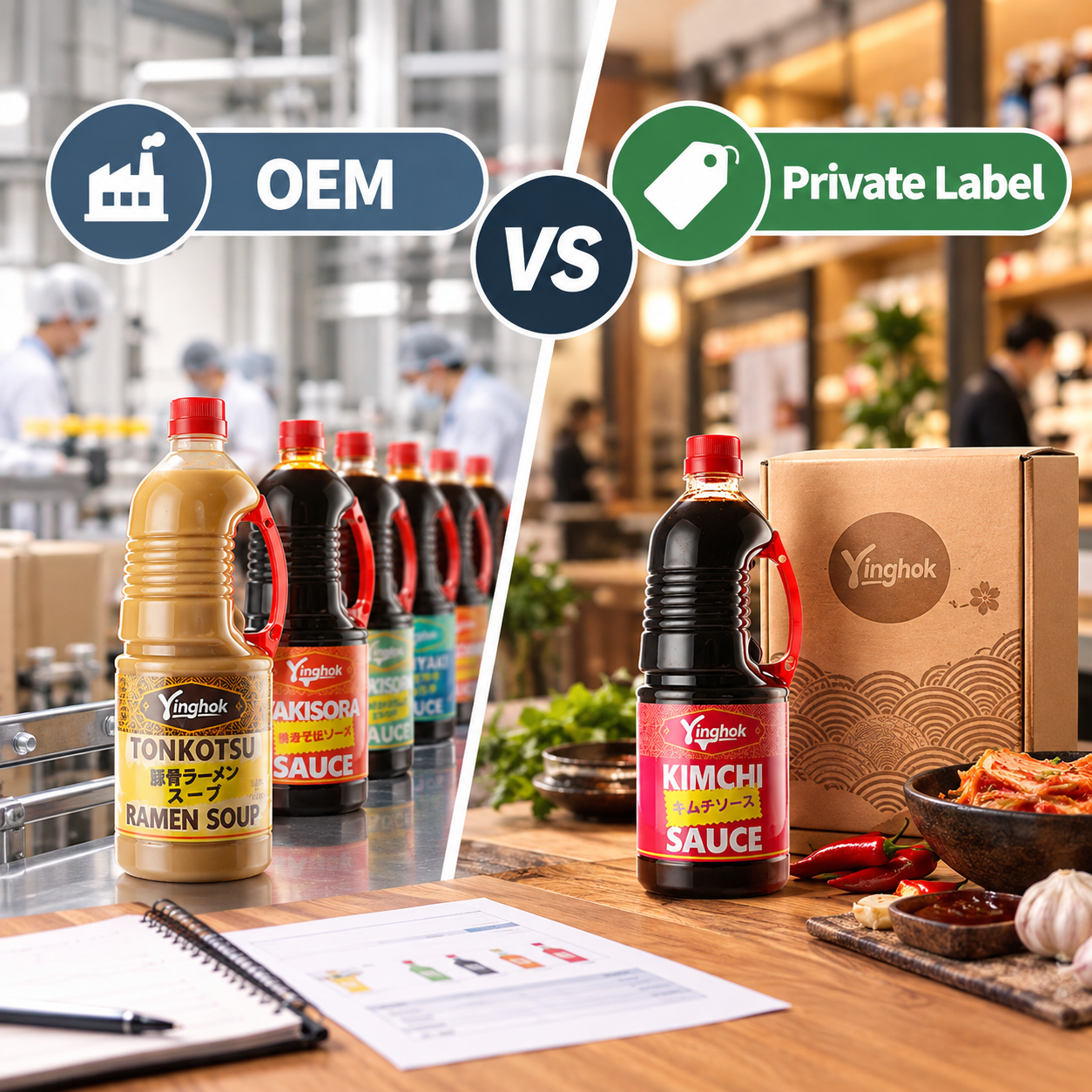
When sourcing sauces for a restaurant chain, supermarket brand, foodservice business, or food manufacturer, buyers often encounter two terms: OEM sauces and private label sauces.
Although the terms are sometimes used interchangeably, they can describe different levels of product customization and brand ownership in B2B food manufacturing.
For a sauce buyer, the distinction matters because it can affect formula development, product specifications, MOQ, packaging, labeling, sample approval, production lead time, quality control, certification documentation, and long-term supply arrangements.
Private label may be suitable when a buyer wants to launch a branded sauce using an existing or lightly customized formula. OEM/ODM may be more appropriate when the buyer needs a product developed around a specific flavor profile, application, recipe, or technical specification.
However, terminology varies among manufacturers. Instead of relying on the label "OEM" or "private label" alone, procurement teams should evaluate what the supplier actually provides.
This guide explains the practical differences and the questions B2B buyers should ask before selecting a sauce manufacturing model.
1. OEM vs. Private Label: What Do the Terms Usually Mean?
In the sauce industry, private label generally refers to products manufactured for a buyer and sold under the buyer's own brand name.
The manufacturer may provide an existing sauce or a relatively standard formula, while the buyer controls the brand, packaging presentation, and market positioning.
For example, a supermarket brand might want to launch its own teriyaki sauce. Instead of developing an entirely new formulation, the buyer could select an existing sauce, make agreed adjustments, and sell the finished product under its own brand.
OEM, or Original Equipment Manufacturing, is commonly used in B2B sourcing to describe manufacturing products according to a buyer's specifications. In sauce manufacturing, this can involve customized formulation, ingredients, packaging, labeling, and other product requirements.
Some manufacturers also use ODM, or Original Design Manufacturing, when the manufacturer contributes more substantially to product development or provides a developed product that can be adapted for the buyer.
The boundaries are not standardized across the global food industry. Therefore, a better procurement question is:
How much of the product can the manufacturer customize, and who controls the final specification?
A Practical Comparison
Area | Private Label | OEM/ODM |
Basic formula | Existing or lightly customized | Custom or substantially modified |
Brand | Buyer's brand | Buyer's brand |
Packaging | Usually customizable | Highly customizable |
Flavor development | Limited to moderate | Moderate to extensive |
Ingredient changes | May be available | Usually more flexible |
Sample development | Selection/adaptation | Development and optimization |
MOQ | Often lower for standard products | Depends on formula and packaging |
Development time | Usually shorter | May require more development |
Product differentiation | Moderate | Potentially higher |
| Best suited for | Retail launches, distributors, new SKUs | Signature sauces, restaurant chains, specialized products |
The actual service model depends on the manufacturer, so buyers should request a project-specific quotation and development scope.
2. When Should a B2B Buyer Choose Private Label?
Private label can be useful when the buyer wants to establish a branded sauce line without developing every element of the formula from the beginning.
This model may be relevant for:
- Supermarket private-label programs
- Grocery distributors
- Food importers
- E-commerce food brands
- Restaurant groups
- Foodservice distributors
- Emerging Asian food brands
For example, a retail company may already know that it wants to sell a Japanese-style teriyaki sauce or a Chinese cooking sauce. The company may primarily need:
- Its own brand
- Custom label artwork
- Appropriate package size
- Product specifications
- Regulatory documentation
- Commercial MOQ
- Reliable repeat supply
In this situation, adapting an existing manufacturer formula can potentially simplify product development.
Yinghok's Asian cooking sauce portfolio explicitly includes private-label customization alongside OEM/ODM services, with applications covering restaurants, foodservice, retail brands, distributors and food manufacturers.
For buyers exploring this model, Yinghok's private label sauce manufacturer solutions can be a starting point for discussing available formulas, packaging and customization requirements.
When Private Label May Be Practical
Private label may make sense when:
- Speed to market is important
- The buyer does not need a completely unique formula
- The target flavor already exists in the manufacturer's portfolio
- The primary differentiation is brand and packaging
- The expected volume is moderate
- The buyer wants to test a new sauce category before investing in extensive R&D
However, buyers should still ask whether the selected formula is exclusive, semi-exclusive, or commercially available to other customers.
3. When Is OEM/ODM Sauce Development More Appropriate?
OEM/ODM becomes more relevant when the buyer's requirements cannot be met by simply selecting an existing sauce.
A restaurant chain, for example, may have a signature sauce that needs to be reproduced consistently across multiple locations.
A food manufacturer may require a specific viscosity, concentration, salt level, acidity, or cooking performance.
A retail brand may want a flavor profile designed specifically for its target market.
Typical customization parameters can include:
- Sweetness
- Saltiness
- Acidity
- Spiciness
- Umami intensity
- Viscosity
- Color
- Aroma
- Ingredient composition
- Concentration
- Usage ratio
- Dietary requirements
- Allergen considerations
- Packaging size
Yinghok's current Asian cooking sauce page describes OEM/ODM services including flavor matching, ingredient customization, private-label development and packaging solutions. It also lists categories such as ramen soup bases, noodle sauces, rice bowl sauces, meat and BBQ sauces, salad and kimchi sauces, simmering sauces and Chinese cooking sauces.
If you already have a reference sauce, recipe specification, target flavor profile, or restaurant application, provide these details during the initial inquiry. A manufacturer can then determine whether an existing formula can be adapted or whether a new development project is more appropriate.
4. Formula, Specifications and Sample Development: Where the Difference Becomes Important
The biggest practical difference between private label and customized OEM/ODM often appears during product development.
A professional sauce project should not stop at "we want a spicy sauce."
The buyer and manufacturer should establish a product specification.
Key Product Specifications
Depending on the product, procurement teams may need to define:
- Flavor profile
- Ingredient requirements
- Allergen status
- pH or acidity where relevant
- Viscosity
- Color
- Net weight
- Packaging format
- Storage conditions
- Shelf life
- Usage instructions
- Target market
- Required certifications or documentation
The sample-development process should then evaluate whether the sauce meets the agreed requirements.
For a customized project, buyers should ideally provide:
1.Existing sauce sample
2.Product photograph or reference product
3.Flavor description
4.Intended application
5.Target market
6.Desired package size
7.Estimated annual volume
8.Ingredient restrictions
9.Certification requirements
10.Target cost range
Yinghok describes a development process involving initial requirements, sample development and flavor optimization, quotation, packaging and label design, mass production/QC, and delivery support.
This type of staged process is useful because it separates product development approval from commercial production approval.
When comparing suppliers, ask for both the physical sample and the corresponding technical specification. This allows your R&D, purchasing and regulatory teams to evaluate the product from different perspectives.
5. MOQ, Packaging and Labeling: What Changes Between the Two Models?
MOQ is another area where buyers should avoid assuming that OEM automatically means "high MOQ" or private label automatically means "low MOQ."
The actual MOQ can depend on:
- Formula
- Ingredients
- Packaging material
- Bottle or pouch size
- Label printing
- Number of SKUs
- Production setup
- Expected order frequency
- Customization level
Yinghok's current website states that custom Asian sauce orders can start from 25 cartons, while its FAQ and product pages also indicate that MOQ and lead time can vary depending on the product and customization. Buyers should therefore confirm the MOQ for the specific SKU and packaging configuration rather than applying a single number to every sauce.
Packaging Is Part of the Product Specification
For private-label and OEM projects, packaging may include:
- Bottle or pouch format
- Capacity
- Closure
- Label material
- Label dimensions
- Printing
- Carton configuration
- Barcode
- Language
- Nutrition information
- Ingredient declaration
- Allergen statement
- Country-of-origin information
Yinghok lists plastic, glass and ceramic packaging options within its Asian cooking sauce portfolio, with specific availability depending on the product.
For a retail brand, the packaging may be a major part of the product's market positioning.
For foodservice, the priority may instead be container size, dispensing convenience, durability and cost per serving.
Provide your target package size, estimated order volume, destination market and desired brand format when requesting a quotation. This gives the manufacturer a more accurate basis for evaluating the project.
6. Quality Control and Certification Should Apply to the Actual Product
Whether you choose private label or OEM, quality management remains a critical part of supplier qualification.
A buyer should ask how the manufacturer controls:
- Raw materials
- Production parameters
- Finished-product specifications
- Microbiological requirements
- Chemical parameters
- Sensory characteristics
- Packaging integrity
- Batch identification
- Traceability
- Non-conforming products
The Codex Alimentarius General Principles of Food Hygiene is an important international reference for food hygiene and HACCP. The 2023 revision places HACCP within the main body of the document and emphasizes Good Hygiene Practices as the foundation for food-safety systems.
BRCGS Food Safety Issue 9 was published on August 1, 2022. BRCGS describes it as a framework covering product safety, integrity, legality and quality, and the standard is assessed by competent third-party certification bodies. BRCGS began a revision process for Issue 9 in 2026, so buyers should verify the current certificate and applicable position statements when qualifying a supplier.
What Should Buyers Request?
Instead of asking only:
"Are you BRCGS/HACCP/ISO certified?"
ask for:
- Certificate copy
- Certificate number
- Manufacturing site
- Certification body
- Validity period
- Scope
- Applicable product categories
Yinghok's website lists HACCP, Halal, FDA and BRC-related compliance attributes. These should be treated as supplier-provided claims that need to be verified against the current certificate and scope applicable to the manufacturing site and product before being used as a purchasing qualification.
7. Halal, Allergen Labeling and Export Compliance
The distinction between OEM and private label becomes particularly important when a product is intended for international markets.
A private-label buyer may own the brand but still depend on the manufacturer for ingredient information, production documentation and technical specifications.
For Halal products, the buyer should verify whether the specific formulation and manufacturing site are covered by the relevant Halal certification.
Similarly, allergen requirements must be evaluated according to the destination market.
For example, the FDA's January 2025 Edition 5 guidance addresses U.S. food allergen labeling requirements. FDA identifies nine major food allergens: milk, egg, fish, Crustacean shellfish, tree nuts, peanuts, wheat, soybeans and sesame.
This is particularly relevant to Asian sauces because ingredients such as soy, wheat and sesame may occur in sauce formulations.
For U.S.-bound products, FDA also states that imported human foods must meet applicable U.S. requirements and that food offered for import must be safe, produced under sanitary conditions and properly labeled. FDA also explains importer responsibilities under the Foreign Supplier Verification Program.
Therefore, OEM and private-label buyers should establish regulatory responsibilities before production—not after the finished labels have already been printed.
Important: U.S. FDA requirements should not automatically be applied to other markets. The final label, allergen declaration, Halal claim, nutrition information and other regulatory statements should be reviewed according to the destination country's requirements.
8. Which Model Is Better for Your Business?
There is no universal answer because the appropriate model depends on the buyer's commercial and technical requirements.
Private Label May Fit Your Project If You Need:
- A relatively established sauce formula
- Your own brand and packaging
- Faster product development
- Limited formula modification
- A manageable initial MOQ
- A straightforward retail or foodservice launch
OEM/ODM May Fit Better If You Need:
- A proprietary flavor profile
- Significant formula customization
- Flavor matching
- Specific ingredient requirements
- Customized viscosity or concentration
- A particular cooking application
- A signature sauce for a restaurant chain
- A specialized product for a target market
For example, a supermarket brand launching a standard teriyaki sauce may primarily require private-label manufacturing.
A restaurant chain developing its signature yakiniku sauce may need a more customized OEM/ODM project.
A food manufacturer incorporating ramen seasoning into a ready-meal product may require a technical specification focused on concentration, application performance, packaging and repeat batch consistency.
For businesses sourcing multiple Asian product categories, a manufacturer capable of handling related products can also simplify supplier management. Yinghok's portfolio includes Asian cooking sauces as well as custom ramen soup base solutions and other specialized sauce categories.
Planning a New Private-Label or OEM Sauce Line?
The most important distinction between OEM and private label is not the terminology used on a supplier's website. It is how much control and customization your project actually requires.
Before choosing a manufacturing model, define:
Formula → Specification → Sample → Packaging → Label → MOQ → QC → Certification → Production → Export
A supplier should be able to clearly explain what it can customize, what documentation it can provide, which MOQ applies, how samples are developed, and how the approved product will be controlled during mass production.
For restaurant groups and distributors, a dedicated foodservice sauce supplier may be particularly relevant when the project requires bulk formats and repeat commercial supply.
For brands building their own Asian sauce portfolio, Yinghok presents OEM/ODM and private-label options across Chinese, Japanese and other Asian sauce categories. Its published process covers consultation, sample development, quotation, packaging and label design, mass production/QC and delivery support.
When submitting an inquiry, include your target sauce, application, destination country, package size, estimated volume, desired customization level and any existing reference sample. This allows the manufacturing team to determine whether a standard private-label solution or a more customized OEM/ODM development process is appropriate.
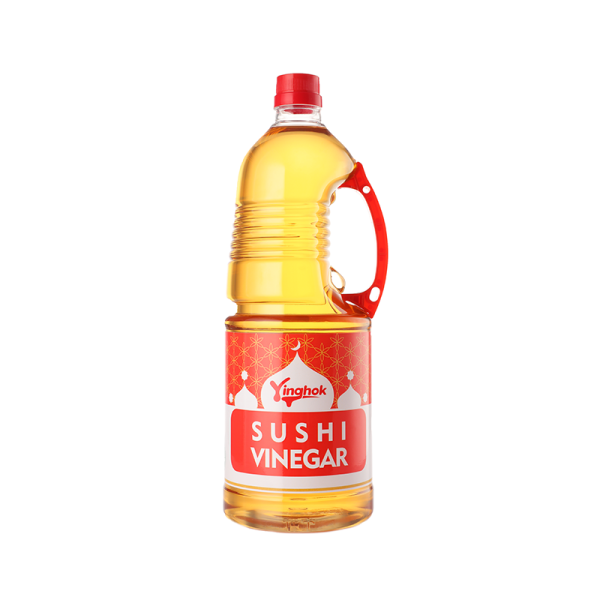
Sushi vinegar, a carefully crafted specialty seasoning, is essential for making Japanese authentic sushi.
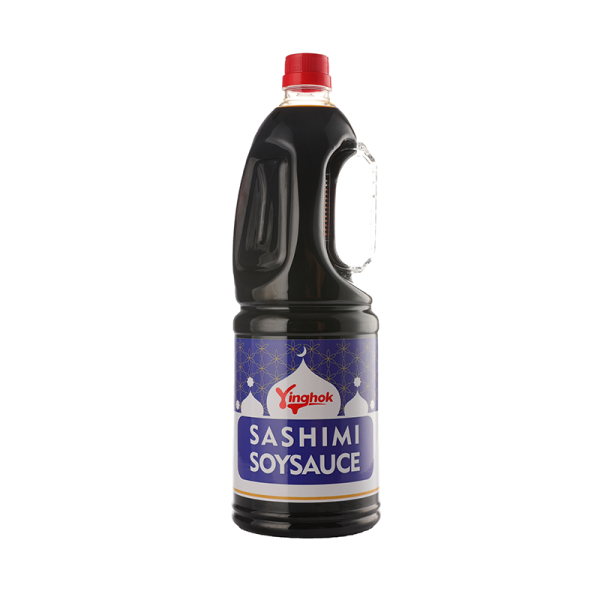
Halal certified sashimi soy sauce with smooth and delicate taste, perfect for halal Japanese cuisine and daily dining.
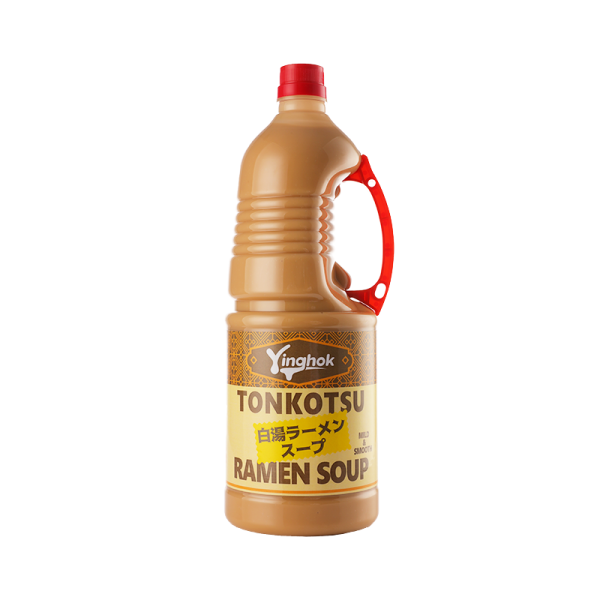
The tonkotsu ramen soup is the soul of Japanese tonkotsu ramen, rich, mellow and delicious without being greasy.
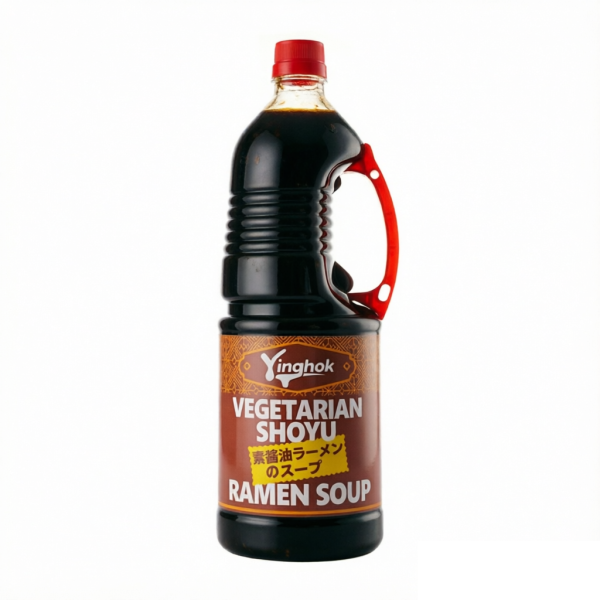
Yinghok's Vegetarian Shoyu Ramen Base is a plant-based alternative to traditional Shoyu ramen broth, specially developed for restaurants, foodservice distributors, retail brands and food manufacturers seeking vegetarian-friendly Japanese ramen solutions.