Tonkotsu vs. Miso vs. Shoyu vs. Shio: A B2B Guide to Ramen Soup Base Types
- Share
- publisher
- YINGHOK
- Issue Time
- Oct 14,2026
Summary
A B2B comparison of the four ramen soup base families — tonkotsu, miso, shoyu, and shio — covering flavor profile, cost per bowl, supply stability, format (concentrate vs powder vs paste), and customization options for importers, distributors, and chain restaurants.
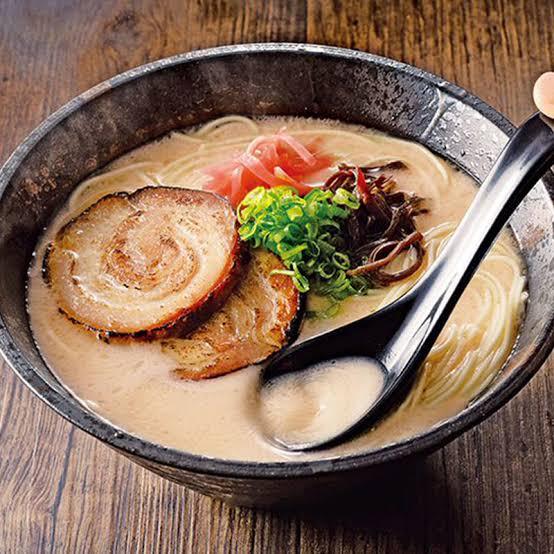
Choosing a ramen soup base is a formulation and supply decision, not a menu preference. Four base types — tonkotsu, miso, shoyu, and shio — behave differently in the bowl, in the kitchen, and on the balance sheet. This guide compares them on the criteria B2B buyers actually use: flavor profile, cost per bowl, supply stability, format options, and customization potential, so importers, distributors, and chain operators can specify the right base with confidence.
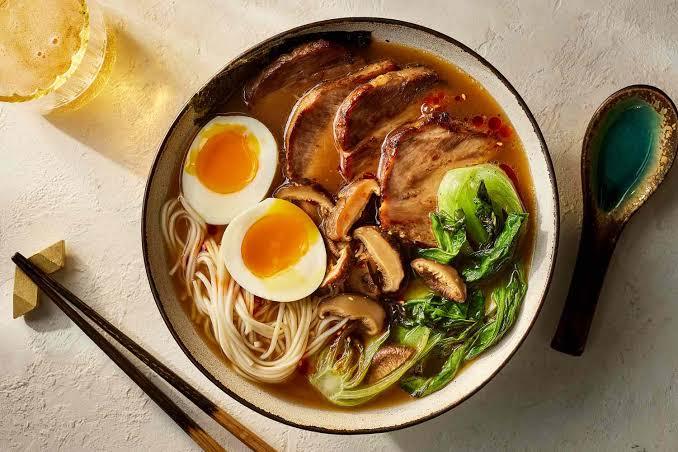 Four base families, four different supply profiles.
Quick Answer: Which Ramen Soup Base Should You Choose?
If you are supplying a chain or a foodservice operator, the fastest filter is this:
- Tonkotsu — choose for rich, milky, pork-forward menus where signature depth justifies a higher cost per bowl.
- Miso — choose for the widest market fit and easiest menu scaling; the most forgiving base for high-volume kitchens.
- Shoyu — choose for clean, savory, soy-driven bowls that pair across chicken, pork, and seafood.
- Shio — choose for light, delicate, salt-based broths where ingredient quality must show through.
For most importers building a first ramen program, miso and shoyu offer the best ratio of market acceptance to cost stability; tonkotsu and shio become differentiators once the core menu is proven. If you are sourcing for the first time, start with our Custom Ramen Soup Bases range and compare formats against your volume targets.
It also helps to separate two questions that buyers often merge: what flavor do my diners want? and what base can I actually supply consistently at my volume? The first is a marketing question, the second is an operations question. A base that wins the menu tasting but cannot be restocked on a predictable lead time will cost more in lost sales than it ever saves in unit price, so treat supply stability as a first-class selection criterion alongside flavor.
The Four Base Types Compared
The table below summarizes how each family performs against the criteria that matter to purchasing and culinary teams.
| Base Type | Flavor Profile | Best For | Relative Cost per Bowl | Supply Stability |
|---|---|---|---|---|
| Tonkotsu | Rich, creamy, pork-bone umami | Signature bowls, premium menus | Higher | Moderate |
| Miso | Savory, fermented, rounded | High-volume menus, broad appeal | Moderate | High |
| Shoyu | Clean, salty-savory, soy-forward | Versatile bowls, chicken/seafood | Moderate | High |
| Shio | Light, delicate, salt-based | Premium, ingredient-led broths | Lower to moderate | High |
Relative Cost, Richness & Supply Stability at a Glance
The chart below positions each base family on a 1-to-5 scale for retail cost pressure, flavor richness, and supply stability. Use it as a quick screening tool before you request samples: a base that scores high on richness and low on stability needs more supplier diligence than one that scores high on both.
Read the chart as a trade-off map rather than a ranking. Tonkotsu sits in the top-right dilemma: maximum richness with only moderate supply stability, which is why it belongs on a premium menu where a higher price absorbs the extra sourcing diligence. Miso occupies the sweet spot — strong richness and top stability — which is exactly why it anchors so many chain programs. Shio is the quiet performer: low cost pressure, high stability, but low inherent richness, so it wins only when the menu is built to let clean ingredients speak.
Format Options and Logistics Impact
Base type is only half the decision. The physical format determines how a kitchen uses the product and how it ships. The table below maps each format to its operational profile.
| Format | Kitchen Speed | Freight Weight | Shelf Life (ambient) | Best Use Case |
|---|---|---|---|---|
| Liquid concentrate | Fastest | Heaviest | Moderate | Chains needing volume dosing consistency |
| Powder | Moderate | Lightest | Longest | Distributors optimizing landed cost |
| Paste | Fast | Mid-weight | Moderate | Miso and thick-style authentic texture |
Freight is often the hidden cost that changes the ranking. A powder base can look more expensive per kilogram on a quote yet land cheaper than a liquid concentrate once water weight, packaging, and chilled logistics are removed from the equation. Before you commit to a format, ask your supplier to quote landed cost per finished bowl, not just price per unit — that single number usually decides the format for you.
There is also a labor dimension that pure price comparison misses. A concentrate that a kitchen can dose by pump is faster and more repeatable across a busy lunch rush than a powder that must be weighed and whisked. For a single-site restaurant the difference is small; across twenty locations it is the difference between a consistent brand and a lottery. When you weigh format, weigh it against your staffing model and your tolerance for variation, not against unit price alone.
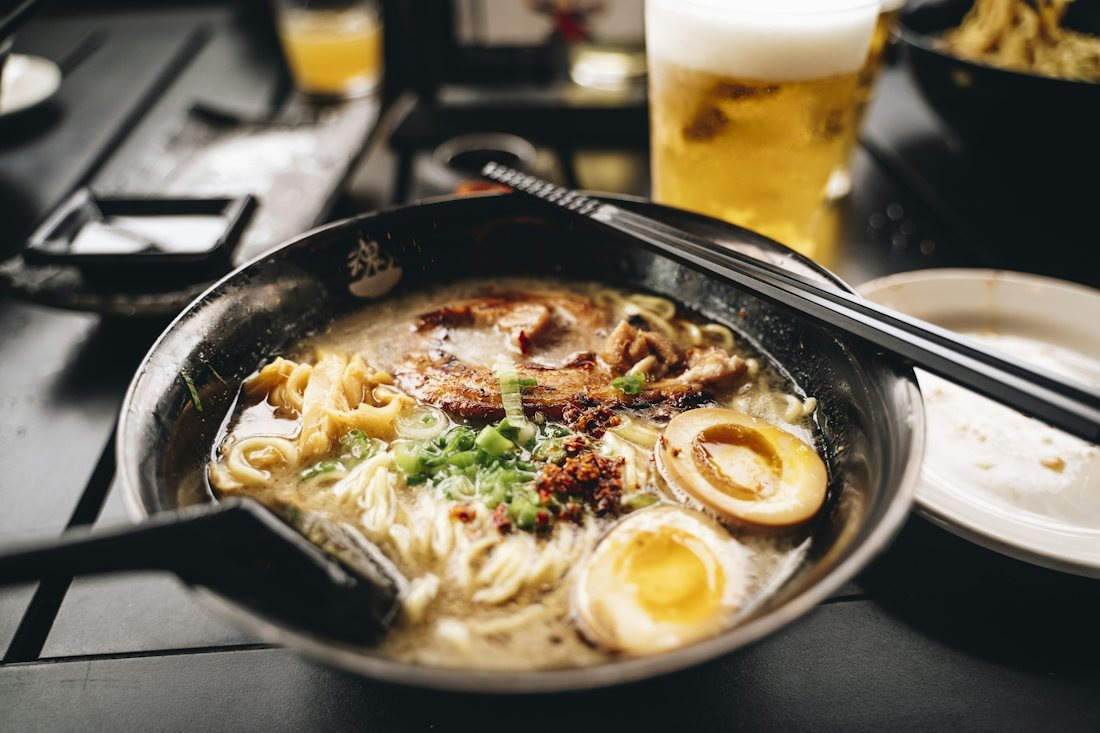 Tonkotsu: depth first, but it demands more careful sourcing.
1. Tonkotsu Ramen Soup Base
Tonkotsu bases are built on pork-bone extraction and deliver the opaque, creamy body that defines Kyushu-style ramen. For a B2B buyer, the two variables that drive everything are collagen yield and emulsion stability: a base that separates in the pot costs you consistency across shifts.
Tonkotsu also carries the highest ingredient cost of the four, so it is usually the premium tier on a menu rather than the volume driver. If your market rewards signature bowls, it justifies the price; if you are scaling a value menu, it stretches margins thin.
Because tonkotsu is the most sensitive to sourcing, it rewards a supplier relationship built on specification discipline. Confirm the extraction method, the collagen-to-broth ratio, and the tolerance for holding temperature before you scale a tonkotsu offering across multiple locations. Ask for batch-level consistency data if the supplier can provide it, and run a holding test at your own service temperature — a tonkotsu that holds beautifully for four hours may break down at six, and your service window is the only test that matters.
2. Miso Ramen Soup Base
Miso bases combine fermented soybean paste with a savory stock, producing a rounded, deeply savory profile that travels well across cuisines. That broad acceptance is why miso is the easiest base to scale: it tolerates regional water differences, holds well under holding temperatures, and adapts to both pork and vegetarian formulations.
From a supply standpoint, miso is the most stable of the four. Multiple miso varieties (white, red, blended) are widely available, and customization — sweetness, salt level, fermentation depth — is straightforward to specify with a manufacturer. For a first-time importer, miso is usually the safest anchor for a ramen program because it is both forgiving in the kitchen and easy to restock.
Miso also gives you the widest runway for menu expansion without new sourcing. A single miso base can support a classic miso ramen, a spicy miso variant, a vegetarian build, and a seasonal limited edition simply by adjusting included blends. That flexibility lowers the number of SKUs you hold while keeping the menu fresh — a meaningful advantage for distributors managing warehouse space and for chains refreshing menus each season.
3. Shoyu Ramen Soup Base
Shoyu bases are anchored by soy sauce and a clear, savory stock. The result is a cleaner, saltier, more savory bowl than tonkotsu, and its neutrality makes it the most versatile of the four — it works with chicken, pork, and seafood, and it adapts from Tokyo-style clarity to richer hybrid builds.
Shoyu's key sourcing question is soy sauce quality: naturally brewed versus blended soy changes the aroma and color of the finished bowl. For buyers, this is where a manufacturer's fermentation control becomes a quality differentiator, and it is worth asking for a specification sheet that states the soy sauce base type explicitly.
Because shoyu is so versatile, it is often the base that lets a single operator cover the broadest menu with the least inventory. A shoyu base can anchor a chicken ramen, a seafood ramen, and a vegetable ramen with only minor add-ins, which makes it a strong choice for operators whose customer base is not yet settled on one regional style. Think of shoyu as the generalist that buys you menu coverage while you learn what your market actually orders.
4. Shio Ramen Soup Base
Shio ("salt") bases are the lightest of the four, using salt as the primary seasoning over a clear stock. Because there is little to mask imperfections, shio places the highest demand on ingredient quality — a well-made shio is clean and delicate, a poorly made one tastes thin and harsh.
Shio is the lowest-cost base in raw materials but rewards premium positioning: it suits menus built on transparency and ingredient-led storytelling, and it pairs naturally with clean-label and reduced-sodium product lines. For a retailer, shio also translates well to shelf-stable consumer products that emphasize simplicity of ingredients — a growing demand in many export markets.
Choosing a Base by Business Model
The right base depends on what you actually sell. This table maps common buyer profiles to a recommended starting point.
| Your Business | Recommended Base | Format | Why |
|---|---|---|---|
| Chain restaurant (high volume) | Miso core + Shoyu variant | Concentrate | Consistency and easy menu scaling |
| Distributor / importer | Miso & Shoyu | Powder | Lower landed cost, long shelf life |
| Premium / signature concept | Tonkotsu | Concentrate or paste | Depth justifies premium pricing |
| Health-forward / clean label | Shio | Concentrate | Ingredient quality shows through |
| Retail brand | Miso or Shoyu | Powder or paste | Private-label friendly, broad appeal |
These are starting points, not rules. Many successful programs combine two or three families — a stable miso core for volume, a shoyu variant for flexibility, and a tonkotsu or shio for premium positioning. The goal is to match your sourcing plan to the menu you actually intend to run, then let a manufacturer help you consolidate SKUs so inventory and freight stay manageable.
How YINGHOK Supports Your Ramen Soup Base Program
As a custom Asian sauce and seasoning manufacturer with export experience across foodservice, retail, and halal markets, YINGHOK builds ramen soup bases around your specification rather than a fixed catalog. Learn more about how we develop your ideal sauce from first brief to production run.
Flavor Customization
Adjust salt, sweetness, spice level, fermentation depth, and umami intensity to match your target market's palate.
Format Flexibility
Order your base as liquid concentrate, powder, or paste to fit your kitchen workflow and freight economics.
Compliance Ready
Halal, vegetarian, and plant-based formulations available. See our halal-certified range and packaging services.
Export Support
Private label packaging, MOQ guidance, sampling, and stable lead times. We also cover custom packaging and label services.
Every engagement starts with a clear specification: target flavor profile, format, packaging, certification needs, and volume forecast. From there we align sampling, labeling, and production so that your first shipment matches the sample your team approved — and every shipment after that does too.
Frequently Asked Questions
What is the difference between ramen soup base and ramen broth?
A ramen soup base is a concentrated seasoning product — liquid, powder, or paste — that a kitchen dilutes or blends to make the finished broth. Broth is the prepared, ready-to-serve liquid. Bases give operators consistency and control over cost per bowl.
Which ramen soup base is best for a restaurant chain?
Miso is the easiest to scale because of its broad market acceptance and high supply stability. Many chains build a miso core and add shoyu or tonkotsu as premium variants.
Can ramen soup bases be customized for halal or vegan markets?
Yes. Halal-certified and plant-based formulations are available, including vegan miso, tonkotsu-style, and spicy ramen bases. Buyers should confirm certification scope and documentation before importing.
What is the typical MOQ for a custom ramen soup base?
MOQ depends on format, packaging, and flavor complexity. Manufacturers typically require a trial order for sampling and a lower volume threshold for label and carton printing than for full custom formulation. See our customization FAQs for specifics.
How do I compare cost between a powder and a liquid concentrate?
Compare landed cost per finished bowl, not price per unit. Powder carries less freight weight but may need more labor to dose; concentrate is heavier to ship but faster and more repeatable in the kitchen. Ask your supplier to model both against your actual service volume.
Related reading: Custom Ramen Soup Bases, bulk ramen soup base for restaurants, private label ramen soup base, wholesale halal miso ramen soup, and ramen soup base manufacturer.