What Should You Look for When Buying Wholesale Asian Sauces?
- Share
- Issue Time
- Sep 10,2026
Summary
Learn how B2B buyers should evaluate Asian sauce suppliers, including MOQ, customization, packaging, food safety, certification and bulk supply.
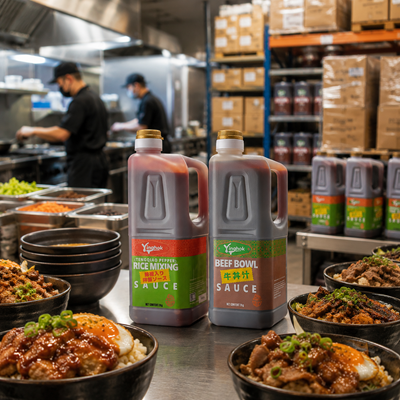
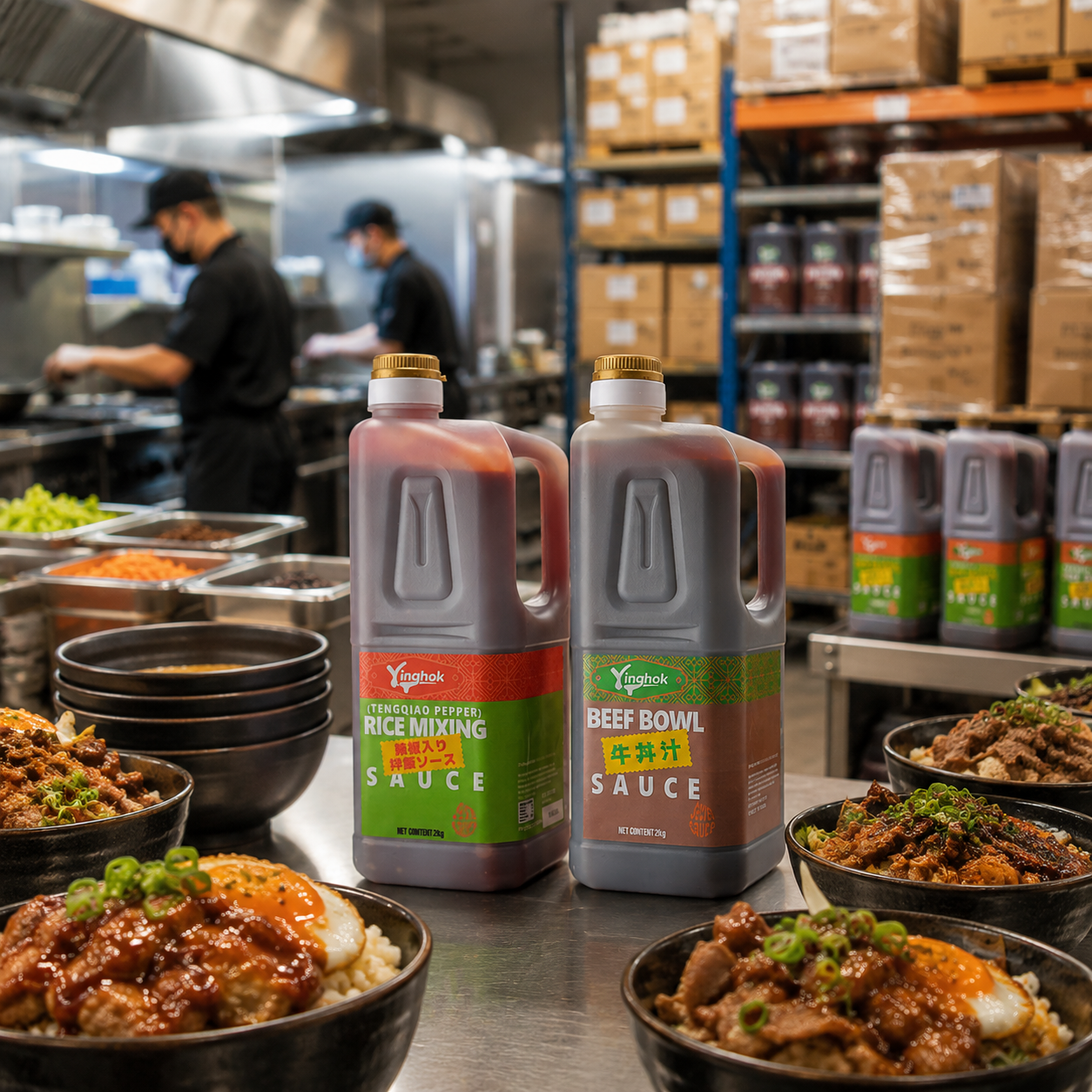
Buying wholesale Asian sauces is a much more complex decision than comparing unit prices between suppliers. For restaurants, foodservice distributors, supermarket brands, food manufacturers, and importers, the right sauce supplier must be able to deliver not only the desired flavor, but also consistent specifications, suitable packaging, reliable quality control, regulatory documentation, flexible customization, and stable bulk supply.
The Asian sauce category covers a broad range of products, including Chinese cooking sauces, Japanese sauces, Korean sauces, ramen soup bases, noodle sauces, sushi sauces, marinades, dipping sauces, and salad dressings. Different applications require different technical and commercial specifications.
For B2B buyers, the key question is therefore not simply "Which Asian sauce tastes best?" but:
Can this manufacturer consistently produce the right sauce, in the right specification, with the right documentation and packaging, at the right commercial scale?
This guide outlines the most important factors to evaluate before selecting a wholesale Asian sauce supplier.
1. Start With the Manufacturer, Not Just the Sauce
One of the most important purchasing decisions is choosing the right manufacturing partner.
A sauce may perform well during a sample test but become difficult to source if the supplier cannot maintain consistent production, support customized specifications, or meet your destination-market requirements.
When evaluating an Asian sauce manufacturer, B2B buyers should consider:
- Manufacturing experience and product expertise
- R&D and formula-development capabilities
- Production and quality-control systems
- Available packaging formats
- MOQ and production flexibility
- Private-label capabilities
- Documentation and regulatory support
- Export experience
- Lead-time management
- Long-term supply stability
Yinghok describes itself as an Asian sauce manufacturer providing OEM/ODM and wholesale solutions for global food businesses. Its product portfolio includes Asian cooking sauces, ramen soup bases, noodle sauces, sushi sauces, seasonings, and other customized products.
The company also states that it has more than two decades of Asian sauce manufacturing experience. For buyers evaluating this claim, the appropriate next step is to verify the relevant manufacturing entity, facility, certifications, and scope during supplier qualification rather than relying on a website statement alone.
Explore Yinghok as an Asian sauce manufacturer for customized wholesale sauce projects.
Ask These Questions Before Quoting
A professional supplier evaluation should establish:
1. Where will the product actually be manufactured?
2. Which manufacturing site is covered by the relevant certifications?
3. Is the formula standard or custom?
4. What product specifications are available?
5. What MOQ applies to the exact SKU?
6. What packaging formats can be supplied?
7. What documentation can be provided?
8. Can the supplier support your destination market?
These questions help distinguish a genuine manufacturing partner from a trading company that simply resells existing products.
2. Define the Product Specification Before Comparing Prices
Wholesale sauce prices are difficult to compare when the specifications are different.
For example, two products may both be described as "teriyaki sauce," "sweet chili sauce," or "ramen soup base," but they may differ substantially in concentration, viscosity, ingredients, packaging, serving ratio, and intended application.
Before requesting a final quotation, buyers should establish a product specification covering:
Specification | What to Confirm |
Product type | Ready-to-use sauce, concentrate, cooking base or dressing |
Flavor profile | Sweet, salty, spicy, sour, umami, smoky, etc. |
Viscosity | Thin, medium or thick |
Color | Target appearance and consistency |
Ingredient profile | Target appearance and consistency |
Allergen status | Applicable allergens and declaration requirements |
Net weight | Retail or foodservice format |
Packaging | Bottle, pouch, sachet, bucket or bulk container |
Storage | Required storage conditions |
| Shelf life | Validated product-specific shelf life |
| Label | Private label or supplier label |
| Application | Restaurant, retail, food manufacturing, etc. |
This is particularly important for foodservice customers.
A sauce designed for a restaurant kitchen may need a larger container and stronger concentration, while a supermarket product may require consumer-friendly packaging, retail labeling, nutrition information, and a different viscosity.
Yinghok's broader Asian sauce portfolio describes customization of flavor, ingredients, packaging, labeling and private branding, while its noodle sauce range also identifies parameters such as flavor intensity, salt level, umami profile, spiciness, concentration, oil content and packaging size as customization considerations.
3. Consider Formula Customization and Sample Development
A major advantage of working directly with an OEM/ODM sauce manufacturer is the ability to develop a formula around a specific commercial application.
Instead of choosing the closest standard product, buyers can discuss parameters such as:
- Sweetness
- Salt level
- Acidity
- Spice intensity
- Umami
- Viscosity
- Color
- Aroma
- Ingredient composition
- Regional flavor preferences
- Intended cooking method
- Target cost
For example, a restaurant chain may need the same flavor profile across multiple locations. A foodservice distributor may require a concentrated sauce that performs consistently in commercial kitchens. A retail brand may need a more differentiated flavor and a customized label.
What Information Should You Give the Manufacturer?
The more complete the initial product brief, the more efficient the development process can be.
Consider providing:
- Existing sauce sample, if available
- Target flavor description
- Reference product
- Intended food application
- Target country or market
- Desired packaging
- Estimated order volume
- Ingredient restrictions
- Allergen requirements
- Halal requirements
- Target price range
Yinghok's published OEM/ODM materials describe services including private-label development, flavor matching, ingredient customization, packaging solutions and bulk supply.
If you are comparing Asian sauce suppliers, request a sample based on your intended application rather than evaluating flavor alone. Ask the manufacturer to provide the relevant product specification alongside the sample so your technical and purchasing teams can evaluate both product performance and commercial suitability.
4. Check MOQ, Packaging and Private-Label Options
MOQ is one of the most important commercial considerations for B2B sauce buyers.
A supplier may offer an attractive unit price but require a large MOQ that creates unnecessary inventory risk.
On the other hand, an extremely low MOQ may not be practical for long-term production or may result in higher unit costs.
Therefore, buyers should evaluate MOQ together with:
- Order volume
- Packaging format
- Number of SKUs
- Customization level
- Label requirements
- Production schedule
- Expected reorder frequency
Yinghok's current website describes flexible MOQ options for customized Asian sauces, but the published figures vary across pages and product categories. Therefore, buyers should request the SKU-specific MOQ in writing rather than assuming that one MOQ applies to the entire product range.
Packaging Should Match the Sales Channel
Wholesale Asian sauces may require very different packaging depending on the buyer.
Foodservice:
Large bottles, pouches, buckets or other high-volume formats may be more appropriate.
Retail:
Smaller consumer-facing bottles, jars, sachets or other retail-ready formats may be required.
Food manufacturing:
Bulk containers and formulation-compatible packaging may be more suitable.
Yinghok states that its Asian sauce portfolio supports packaging ranging from smaller formats to larger foodservice and bulk containers, with plastic, glass and ceramic among the packaging materials shown on its platform. Exact availability should be confirmed for each product.
For private-label buyers, packaging discussions should also cover:
- Bottle or container format
- Cap or closure
- Label dimensions
- Printing method
- Carton configuration
- Barcode requirements
- Language requirements
- Nutrition information
- Ingredient declaration
- Allergen statement
- Country-of-origin information
- Import-market requirements
Send your target package size, estimated order volume, destination market and whether you need OEM or private-label packaging. This gives the supplier enough information to provide a more meaningful quotation.
5. Verify Food Safety Systems and Certifications
Certifications can be important supplier-qualification tools, but buyers should understand exactly what each certification means and what it covers.
HACCP
The Codex Alimentarius General Principles of Food Hygiene is a key international reference for food hygiene and HACCP. The 2023 revision moved the HACCP system from an annex into the main body and describes HACCP as a science-based, systematic approach for identifying hazards and establishing controls for significant food-safety hazards.
For procurement, buyers should ask whether HACCP is implemented or certified, who performed the certification or assessment, which manufacturing site is covered, and whether the scope includes the products being purchased.
BRCGS
BRCGS Food Safety Issue 9 was published on August 1, 2022, with first audits under Issue 9 scheduled for February 2023. BRCGS states that food-safety culture is an important component of its Food Safety Standard.
Rather than simply asking whether a supplier is "BRC certified," buyers should request:
- Current certificate
- Certification body
- Manufacturing site
- Certificate number
- Validity period
- Product/category scope
Important: A certification logo on a supplier's website should not be treated as sufficient evidence. Procurement teams should obtain the actual certificate and confirm its scope and validity.
6. Review Halal, Allergen and Destination-Market Requirements
For international buyers, regulatory compliance needs to be considered before the label is printed.
Halal Requirements
Halal requirements can involve ingredients, processing, production controls, certification and the destination market.
JAKIM's official Halal Malaysia information states that certification applies to specific products or premises and that changes involving ingredients, suppliers, manufacturing premises and other relevant information may need to be reported.
For international supply, buyers should therefore verify:
· Whether the exact SKU is Halal certified
· Which manufacturing site is covered
· Which certification body issued the certificate
· Whether the certificate is recognized in the destination market
· Whether the current formulation matches the certified product
JAKIM also provides information concerning recognized foreign Halal certification bodies for products entering Malaysia.
Allergen Labeling
Allergen requirements vary by market.
In the United States, FDA recognizes nine major food allergens: milk, eggs, fish, Crustacean shellfish, tree nuts, peanuts, wheat, soybeans and sesame. Sesame became the ninth major allergen under the FASTER Act, effective January 1, 2023.
This is particularly relevant to Asian sauces because ingredients such as soy, wheat and sesame can occur in many sauce formulations.
For U.S.-bound products, FDA's January 2025 Edition 5 guidance addresses food allergen labeling requirements for FDA-regulated foods.
However, U.S. requirements should not be automatically applied to Europe, Canada, Australia, the Middle East or other markets.
The final label should be reviewed against the regulations applicable to the destination country.
7. Evaluate Quality Control, Shelf Life and Batch Consistency
For a long-term B2B relationship, the first sample is only the beginning.
The supplier should be able to explain how the approved specification is controlled during commercial production.
Depending on the product, buyers may want to establish specifications for:
- Appearance
- Color
- Aroma
- Taste
- Viscosity
- pH/acidity where applicable
- Microbiological parameters
- Chemical parameters
- Net weight
- Packaging integrity
- Batch identification
Yinghok describes quality-control activities within its product-development and manufacturing processes, including microbial, chemical and sensory testing on relevant sauce products.
However, buyers should distinguish between a manufacturer's general quality system and the actual QC specification of the SKU being purchased.
Do Not Assume One Shelf Life Applies to Every Sauce
Shelf life depends on the formulation, processing, packaging, storage conditions and validation of the specific product.
Therefore, a buyer should request:
- Product-specific shelf life
- Storage conditions
- Manufacturing date coding
- Lot/batch identification
- Recommended unopened storage
- Instructions after opening, where applicable
Do not take a shelf-life period from one sauce and apply it to another.
For imported products, the purchaser should follow the manufacturer's approved specification and product label, together with the requirements of the destination market.
This article provides general procurement guidance, not product-specific food-safety advice. Always follow the approved product label, technical specification, local regulations and qualified food-safety or regulatory advice.
8. Confirm Bulk Supply and Export Cooperation Before Placing the Order
A successful wholesale sauce program should have a clear process from sample approval to repeat orders.
A practical procurement workflow can look like this:
Step 1: Define the Product Brief
Specify the target flavor, application, market, packaging and expected volume.
Step 2: Develop and Approve Samples
Evaluate flavor, viscosity, appearance, cooking performance and application suitability.
Step 3: Confirm Commercial Specifications
Finalize formula, packaging, MOQ, price, lead time, labeling and documentation.
Step 4: Approve Artwork and Labels
Check ingredients, allergens, nutrition information, claims, language and destination-market requirements.
Step 5: Start Mass Production
Production should follow the approved specification and applicable food-safety and quality-control procedures.
Step 6: Coordinate Export
Confirm commercial invoice, packing list, shipping information, product documentation, labeling requirements and importer-specific requirements.
For U.S. imports, FDA states that importers are responsible for ensuring that food products entering interstate commerce are safe, sanitary and properly labeled, while imported food can be inspected at U.S. ports of entry.
This means export cooperation should not be treated as an afterthought. The importer, manufacturer and other supply-chain partners should establish regulatory and documentation responsibilities before shipment.
For foodservice-focused buyers, Yinghok's dedicated foodservice sauce supplier solution provides a useful starting point for discussing bulk packaging, customized products and restaurant-oriented supply requirements.
For companies sourcing multiple Asian categories, buyers can also consider a supplier capable of handling related product lines. Yinghok, for example, offers custom ramen soup base supplier solutions alongside cooking sauces.
Looking for a Reliable Asian Sauce Manufacturing Partner?
The right wholesale Asian sauce supplier should be evaluated on much more than price.
A strong B2B supplier should be able to support the complete purchasing process—from product selection and sample development to formula customization, packaging, labeling, quality control, certification documentation, bulk production and export coordination.
For retail brands, a capable private label sauce manufacturer can help transform a product concept into a market-ready SKU. For restaurants and foodservice distributors, the priority may instead be consistent flavor, practical packaging, predictable supply and repeat-order capability.
Yinghok's published product portfolio covers Chinese, Japanese and Korean sauces, ramen soup bases, noodle sauces, sushi sauces and other Asian seasonings, with OEM/ODM, private-label and wholesale options.
When making an inquiry, provide your target sauce, application, destination country, packaging size, estimated order volume, customization requirements and any existing sample or specification. This allows the supplier to evaluate the appropriate formula, MOQ, packaging, documentation and production route for your project.
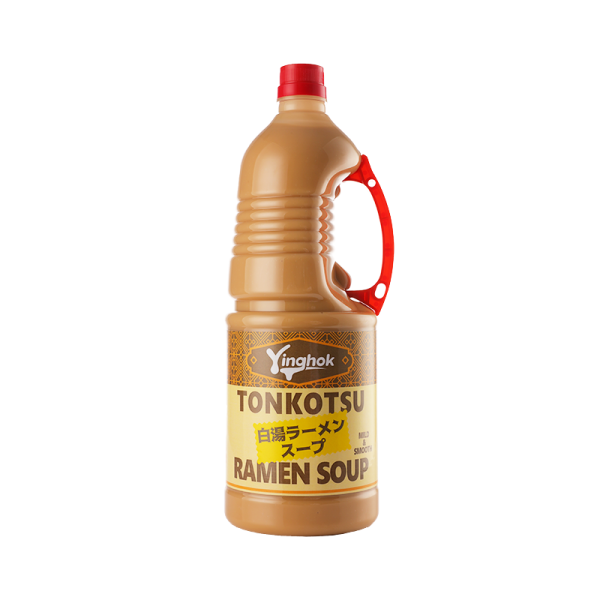
The tonkotsu ramen soup is the soul of Japanese tonkotsu ramen, rich, mellow and delicious without being greasy.
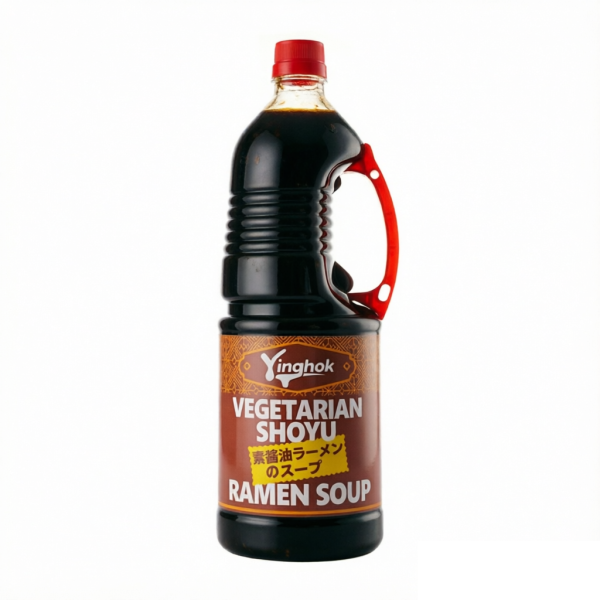
Yinghok's Vegetarian Shoyu Ramen Base is a plant-based alternative to traditional Shoyu ramen broth, specially developed for restaurants, foodservice distributors, retail brands and food manufacturers seeking vegetarian-friendly Japanese ramen solutions.
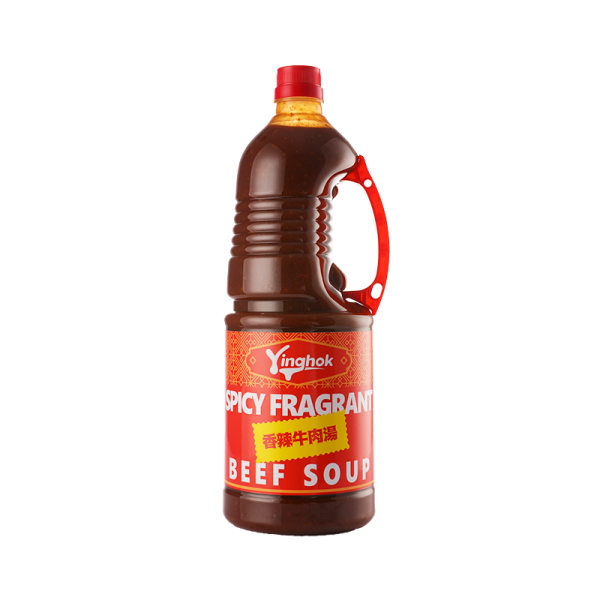
Spicy Fragrant Beef Soup brings bold and rich flavor with genuine beef aroma, great for restaurant cooking.
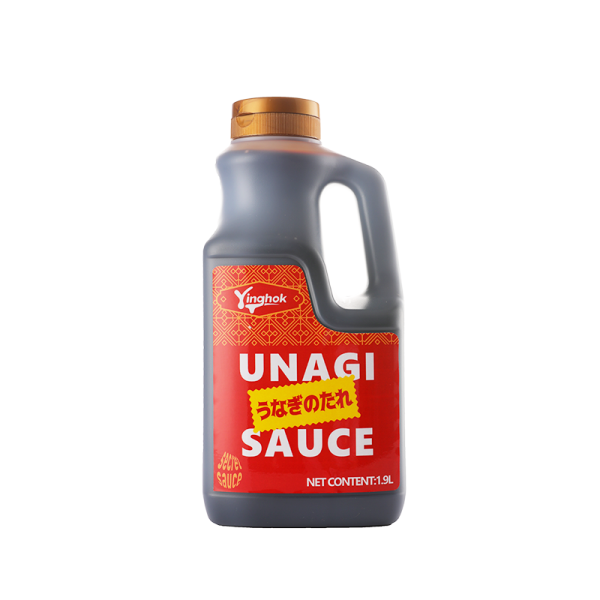
Unagi sauce is the core seasoning sauce for eel in Japanese cuisine, characterized by its rich sweet-and-savory flavor.