Best Asian Sauces for Supermarket Private Labels: A B2B Buyer's Guide
- Share
- Issue Time
- Oct 17,2026
Summary
Explore Asian sauces for supermarket private labels, with guidance on product selection, customization, MOQ, packaging, food safety and bulk supply.
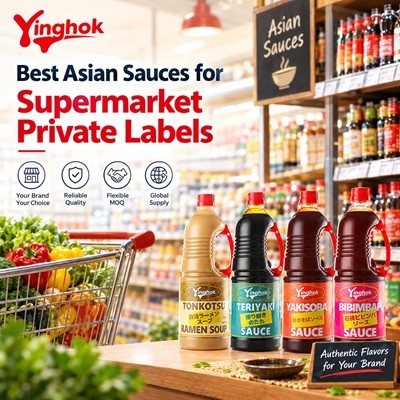
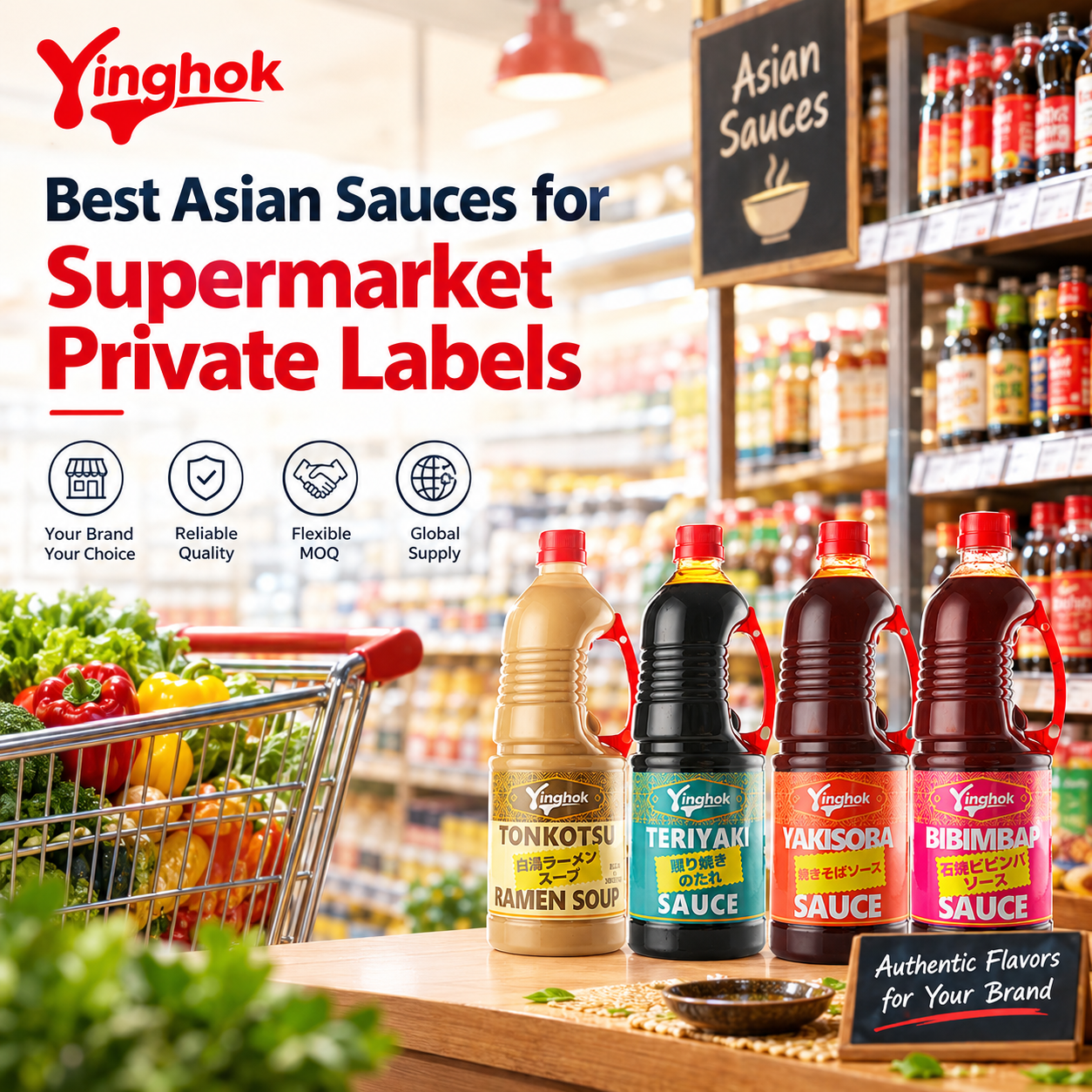
Supermarket private-label sauces offer retailers an opportunity to build a differentiated grocery range around Asian cuisines, convenient meal preparation, and versatile cooking applications. However, a successful private-label sauce program requires more than selecting popular flavors. Retail buyers must balance product positioning, target pricing, ingredient specifications, packaging requirements, food safety documentation, and reliable replenishment.
For retailers, importers, distributors, and private-label category managers, the key question is not simply which Asian sauces to stock. It is which products can form a commercially coherent range, meet the retailer’s requirements, and remain consistent across repeat orders.
This guide explores the Asian sauce categories worth evaluating for supermarket private labels and explains how to work with a manufacturer from initial product selection to mass production.
1. Which Asian Sauces Should Supermarkets Consider for Private Labels?
Rather than launching a large assortment immediately, buyers can evaluate several product groups based on their intended shelf position, culinary applications, and target customer base.
Japanese Cooking Sauces
Japanese-style sauces can support a range of retail applications, from everyday home cooking to Japanese-inspired meal preparation.
Potential products include:
• Teriyaki sauce for glazing, stir-frying, and marinades
• Yakitori sauce for grilled-food applications
• Sushi sauces for sushi, rice bowls, and other Japanese-style dishes
• Japanese noodle sauces for quick noodle meals
• Ramen soup bases for shoppers preparing ramen at home
• Japanese-style simmering sauces for braised dishes
For retailers seeking a coordinated Japanese cooking range, these products can share a recognizable cuisine theme while serving different cooking occasions.
A buyer evaluating a custom ramen soup base supplier should specify whether the product is intended as a concentrated base, a ready-to-use broth, or a sauce requiring dilution. These formats have different usage instructions, packaging requirements, and formulation considerations.
Chinese Cooking Sauces
Chinese-style cooking sauces can support categories such as stir-frying, braising, dipping, and meal preparation.
Products worth evaluating include:
• Sweet and sour sauce
• Chili sauce
• Stir-fry sauce
• Seafood sauce
• Chinese-style braising sauces
The appropriate range depends on the retailer's positioning and target market. Some buyers may prefer familiar, versatile flavors, while specialist retailers may want more regionally specific products.
Explore Yinghok's custom Chinese cooking sauce range when evaluating products for a potential private-label assortment.
Korean-Inspired and Other Asian Sauces
Depending on the target market, buyers may also evaluate Korean-inspired spicy sauces, cold noodle sauces, bibimbap sauces, or other regional Asian condiments.
Before adding these products, confirm the intended flavor profile, ingredient declaration, product naming, and usage instructions. A product marketed as Korean-inspired, for example, should have a formulation and positioning that support the claim.
Buyer Recommendation: Build the initial shortlist around specific retail roles rather than simply accumulating flavors. A cooking sauce, a noodle sauce, and a dipping sauce may offer more useful assortment coverage than several products with overlapping applications.
2. How to Build a Retail-Ready Private-Label Sauce Assortment
A supermarket range should be designed around category architecture, not only individual product appeal.
A practical planning framework is to group candidate products into three roles:
Core products: Familiar flavors intended to provide the foundation of the range.
Cuisine-specific products: Products that help establish a clear Japanese, Chinese, Korean-inspired, or broader Asian cooking proposition.
Differentiated products: Customized flavors, heat levels, or specialized applications that help the retailer distinguish its assortment from competing products.
These are planning categories, not guaranteed sales-performance classifications. Actual product selection should be validated against the retailer’s sales data, category strategy, competitive shelf review, and target customer profile.
For each candidate SKU, define the following before requesting quotations:
• Target retail price and expected wholesale cost
• Intended customer and principal cooking application
• Desired flavor profile and heat level
• Target package size and format
• Planned number of SKUs in the launch
• Expected launch quantity and replenishment pattern
• Required certifications and destination-market documentation
This information helps the manufacturer assess whether an existing formula, a modified formula, or a new product-development project is the most appropriate route.
It also makes quotations easier to compare because suppliers are responding to the same commercial brief.
3. What Product Specifications Should Retail Buyers Define?
A private-label product needs an agreed specification before packaging artwork and production planning are finalized.
Formula and Sensory Profile
Specify the flavor characteristics that matter to the intended market. These may include sweetness, saltiness, acidity, chili heat, garlic intensity, umami, viscosity, and aroma.
Where possible, provide a benchmark sample or a written sensory brief. If the retailer wants a familiar flavor with a distinctive brand identity, clarify which characteristics must remain recognizable and which may be adjusted.
Ingredients and Nutritional Targets
The specification should identify relevant ingredient requirements, including any restrictions on particular ingredients, additives, allergens, or animal-derived ingredients.
If the retailer intends to make claims such as vegetarian, gluten-free, or non-GMO, define the applicable criteria and supporting evidence before finalizing the formulation and label. Do not assume that a recipe or product name alone substantiates a claim.
Nutritional targets should also be agreed early if the retailer requires a specific nutrition profile or declaration.
Product Format and Shelf Life
Determine whether the sauce will be ready to use, concentrated, or intended for dilution. Specify net content, packaging format, storage conditions, and proposed shelf life.
Shelf life must be supported by product-specific evidence and appropriate assessment. It should not be copied from another sauce simply because the products look similar.
The manufacturer's final product specification, validated shelf-life basis, and label instructions should govern the individual SKU. Destination-market requirements and advice from qualified food-safety professionals should also be considered.
Batch Consistency
Ask the supplier how it defines and checks the approved product standard. Depending on the sauce, relevant controls may include sensory comparison, pH, viscosity, fill weight, ingredient verification, and microbiological or chemical testing where appropriate.
Not every test applies to every sauce. The control plan should reflect the formulation, processing method, packaging, intended use, and identified hazards.
4. OEM or Existing-Formula Private Label: Which Route Fits Your Range?
Supermarket buyers generally need to decide how much product differentiation is necessary before choosing a manufacturing route.
Existing-formula private label may be appropriate when a retailer wants to launch a sauce using a manufacturer's established formulation, with its own brand identity and agreed retail packaging. The buyer should confirm which formula adjustments are possible and whether the existing product meets the retailer's requirements.
Customized OEM/ODM development may be more suitable when the retailer needs a distinctive flavor profile, specific ingredient requirements, a tailored viscosity, or a product designed for a defined application.
The terminology used by manufacturers is not fully standardized across the industry. Buyers should therefore confirm the actual scope of formulation ownership, customization, testing, and packaging services instead of relying on the label “OEM” or “private label” alone.
For an initial launch, an existing formula may reduce development complexity. A customized formula may offer greater differentiation but can require additional sampling, technical review, testing, and lead time.
Ask prospective suppliers to clarify:
• Whether the proposed formula already exists
• Which adjustments are available
• Whether the formula is exclusive to the retailer
• Who owns any newly developed formulation or related intellectual property
• How formula changes are approved and documented
• Whether changes trigger new testing, label review, or a revised shelf-life assessment
These details should be documented in the commercial agreement.
If your retail range requires a particular flavor profile, ingredient specification, or application, prepare a product brief before beginning development. This gives the manufacturer a clear basis for evaluating feasibility, sampling, and quotation.
5. MOQ, Retail Packaging and Private-Label Artwork
Packaging decisions affect the shelf presentation, shipping configuration, cost structure, and production planning of a private-label sauce program.
Choose Packaging for the Intended Retail Position
Potential formats include bottles, jars, pouches, and other suitable food-contact containers. The right choice depends on the sauce's characteristics, target price, retail positioning, and intended use.
Buyers should assess:
• Net content and package dimensions
• Dispensing convenience and closure performance
• Compatibility between the sauce and packaging materials
• Container integrity and transport protection
• Case configuration and palletization
• Shelf presentation and barcode placement
• Applicable packaging and food-contact requirements
Confirm that the selected packaging is suitable for the actual formulation and processing conditions. A container suitable for one sauce may not be appropriate for another.
Confirm MOQ at the SKU Level
Minimum order quantities can vary by formula, packaging format, label material, production setup, and the number of SKUs in the order.
Request separate quotations for each relevant cost component, including product manufacturing, packaging, printed labels, artwork or setup charges where applicable, and shipping terms.
Ask whether the MOQ applies per SKU, per packaging design, or to the total order. A combined order across several sauces does not automatically mean that all SKUs can share one minimum quantity.
For new retail programs, compare the minimum production commitment with the retailer's planned launch quantity and replenishment cycle. The objective is to avoid committing to more stock than the business can reasonably distribute while maintaining a workable supply arrangement.
Prepare Label Artwork Early
Before artwork approval, establish who is responsible for supplying and checking the product name, ingredient list, allergen declaration, net quantity, nutrition information, date coding, storage instructions, origin information where required, and other mandatory particulars.
Requirements vary by market and product type. For U.S.-bound products, the FDA's official guidance on importing human foods explains that imported foods must meet applicable U.S. requirements, including truthful labeling in English. The FDA also states that it does not pre-approve individual food products or labels before importation.
Retailer approval of artwork does not replace regulatory review.
6. Food Safety, Certifications and Retailer Supplier Approval
Supermarket buyers often need more than a sample that tastes right. They may also require documented evidence that the supplier and product meet the retailer's food-safety and compliance criteria.
Verify the Actual Certification Scope
Ask for copies of relevant certificates and verify:
• The legal entity and manufacturing site covered
• The scope of products and activities
• The issuing or certification body
• The certificate's validity and current status
• Any conditions required by the retailer or destination market
BRCGS Global Standard Food Safety is a third-party certification standard covering food-safety, quality, legality, and operational controls. Buyers can consult the official BRCGS Food Safety information to understand the standard and check current requirements.
HACCP refers to a systematic approach to identifying and controlling food-safety hazards. If a supplier states that it is “HACCP certified,” ask what specific assessment or certification scheme supports the claim rather than assuming all HACCP-related statements mean the same thing.
For Halal products, verify the specific product or product scope, manufacturing site, certification body, certificate validity, and recognition requirements in the destination market. Do not assume that one certificate automatically covers every formula, site, or export destination.
Assess Food-Safety Controls and Traceability
Request documentation appropriate to the product and retailer's approval process. Depending on the circumstances, this may include product specifications, ingredient and allergen information, traceability procedures, test reports, process-control information, and procedures for handling non-conforming products.
A retailer should also understand how the supplier manages changes to ingredients, processing, packaging, and approved specifications.
These are supplier-evaluation points, not claims that any particular supplier automatically meets every requirement.
7. Sample Development, Bulk Supply and Export Coordination
A structured development process helps buyers identify issues before committing to a full production run.
Step 1: Submit a Clear Product Brief
Provide the target application, flavor profile, ingredient restrictions, packaging preference, destination market, estimated order quantity, and required documentation.
Step 2: Evaluate Samples Against Agreed Criteria
Use a documented sample-review sheet covering sensory characteristics, appearance, viscosity, intended application, and any agreed technical parameters. Record requested changes clearly so that both parties are evaluating the same target.
When requesting samples from a private label sauce manufacturer, identify whether you are evaluating an existing formula or asking for a customized product. Confirm sample availability, development charges if any, and the expected review schedule before proceeding.
Step 3: Approve the Commercial and Technical Specifications
Before production, confirm the approved formula or specification, packaging materials, label artwork, MOQ, quotation validity, payment terms, production lead time, and inspection or release requirements.
Any changes after approval should be reviewed formally.
Step 4: Plan Replenishment and Export Documentation
Retail supply requires coordination beyond the first shipment. Discuss production scheduling, forecast sharing, reorder lead times, carton and pallet specifications, shipping arrangements, and documentation responsibilities.
For U.S. imports, FDA's Foreign Supplier Verification Programs (FSVP) rule places risk-based foreign-supplier verification responsibilities on covered importers. See the FDA's official FSVP guidance. The precise obligations depend on the importer, product, and applicable exemptions or modified requirements.
For other destinations, buyers and suppliers should confirm the relevant food-import, labeling, customs, and certification requirements with the appropriate authorities and qualified compliance professionals.
Step 5: Establish an Ongoing Supply Review
After launch, review delivery performance, product consistency, complaints, forecast accuracy, and specification changes. Agree on how issues will be investigated and how corrective actions will be communicated.
The goal is to establish a repeatable process for both initial orders and future replenishment, rather than treating each shipment as an isolated transaction.
Planning a New Supermarket Private-Label Sauce Line?
Choosing the right Asian sauces is only the first step. A workable private-label program also needs clearly defined product specifications, suitable retail packaging, verified compliance documentation, realistic order quantities, and a manufacturer capable of supporting the agreed supply plan.
Yinghok presents its Asian sauce manufacturing solutions for wholesale, foodservice, and retail-brand applications. Prospective buyers should confirm the relevant formula, production site, documentation, packaging options, MOQ, lead time, and export arrangements for each proposed SKU.
Share your target market, proposed sauce categories, packaging requirements, and estimated order quantities to begin a product discussion with Yinghok. For bulk purchasing and private-label development, request product-specific information before making a sourcing decision.
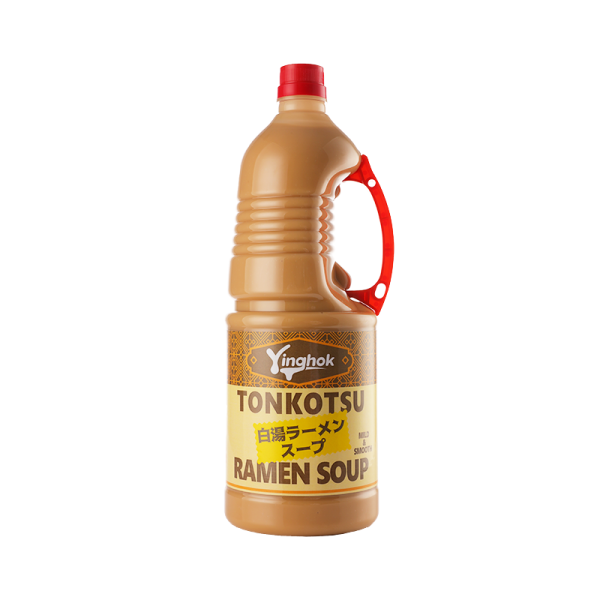
The tonkotsu ramen soup is the soul of Japanese tonkotsu ramen, rich, mellow and delicious without being greasy.
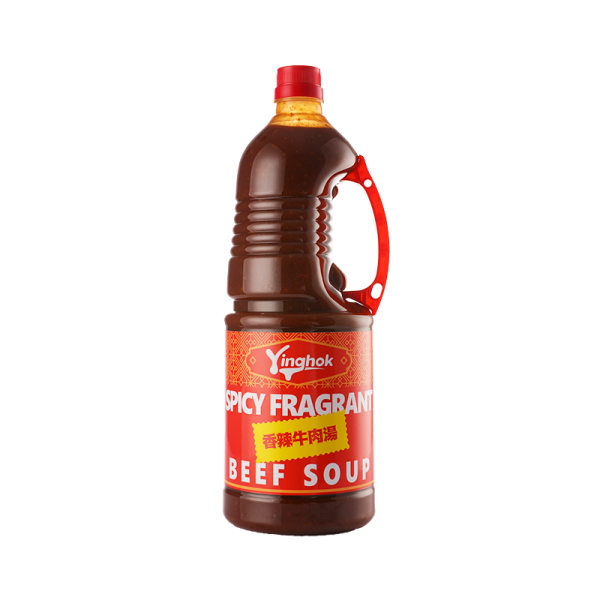
Spicy Fragrant Beef Soup brings bold and rich flavor with genuine beef aroma, great for restaurant cooking.
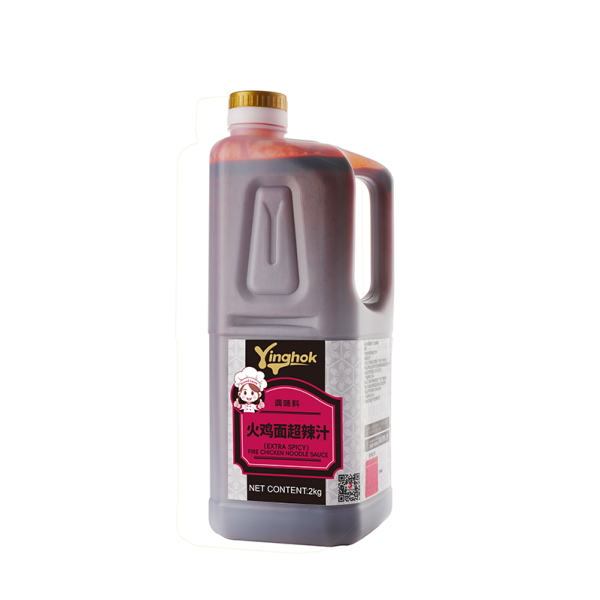
Premium fire chicken sauce designed for noodles, ideal for bulk orders and custom packaging for food business. Developed to deliver an intense spicy flavor with rich umami and balanced seasoning, our noodle sauce is ideal for spicy noodle products, stir-fried noodles, ramen and other Asian-style dishes.
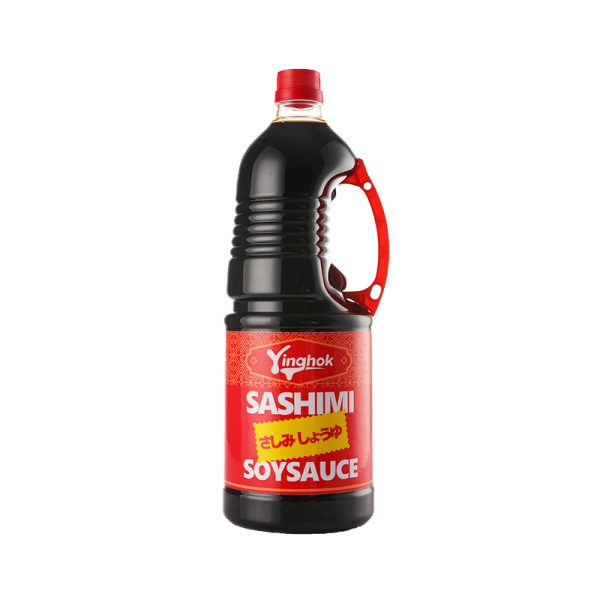
Premium sashimi soy sauce with rich umami flavor, ideal for commercial sashimi, sushi and Japanese restaurants.