Hon Mirin vs Mirin Fu: Key Differences, Uses and a Buyer Checklist
- Share
- Issue Time
- Nov 26,2026
Summary
A B2B buying guide to hon mirin and mirin fu. Compare alcohol levels (13.5%, 10.5% and 8%vol versus alcohol free), Brix options, flavour, gloss, labelling and cost. Includes a quick-reference table, a full comparison table, application guidance, an eight-step procurement checklist, six FAQs and internal links to Yinghok mirin and Japanese seasoning groups.
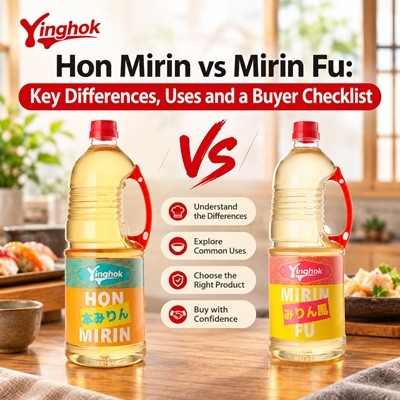
If you buy Japanese seasonings for a restaurant group, a central kitchen or a food factory, the choice between hon mirin and mirin fu is not a matter of preference. It changes the alcohol declaration on your label, the aroma of the finished dish, the price per litre and the set of customers you are allowed to sell to. The two bottles look similar on a shelf, and both are sold as "mirin", but they are different products built for different jobs. The short answer is this: hon mirin is the brewed, alcohol-containing seasoning used where aroma, gloss and a rounded finish matter. Mirin fu (also written aji-mirin) is a seasoned, little-or-no-alcohol alternative used where sweetness is needed at lower cost, in volume, or in markets where alcohol must be avoided. Yinghok supplies both under the Custom Mirin Series, with alcohol levels, Brix, pack sizes and private label all open for specification. Direct answer for buyers: if the dish is finished without a cooking step, and the product will be sold where alcohol is restricted, specify Mirin Fu. If the product is cooked and the selling point is authentic Japanese flavour, specify Hon Mirin. Hon mirin is the "true" mirin of Japanese cooking. It is brewed, and the alcohol is part of what makes it work. During cooking, that alcohol carries volatile aroma, helps dissolve and round off harsh notes, and leaves behind a characteristic gloss on glazed and simmered food. The sweetness is broad rather than sharp, so a teriyaki sauce made with hon mirin tastes layered instead of simply sweet. Yinghok's Hon Mirin is offered at 13.5%vol, 10.5%vol and 8%vol, with Brix options of 33, 38, 44 and 46. That range exists because different processes need different behaviour: a higher-Brix product suits a thicker glaze, while a lower-alcohol version suits a sauce that receives less cooking. All versions share a 24-month shelf life and should be stored in a cool, dry place away from light. In practice, hon mirin earns its cost in dishes where the seasoning is visible to the customer. Teriyaki glaze, grilled eel sauce, simmered vegetables, beef bowls and premium sushi sauces all benefit from the aroma and the sheen that a brewed product leaves behind. It is also the standard choice for simmering sauces sold to Japanese restaurants that judge a product by the smell of the pan. The trade-off is regulatory as much as culinary. In several markets, a seasoning containing this level of alcohol is classified differently from a food ingredient, which affects import paperwork, labelling and where the product can be stocked. Before you lock a specification, confirm how the destination authority treats an alcohol-containing seasoning, especially for school meals, airline catering and retail chains with alcohol-free policies. Mirin Fu, also called aji-mirin, starts from a different brief. It delivers the sweetness and body that a recipe expects from mirin, but it is made to be alcohol free. Yinghok's Mirin Fu is specified at 40% or 44% Brix, with a 24-month shelf life and the same cool, dry storage requirement as Hon Mirin. Because it is a seasoned syrup rather than a brewed wine, Mirin Fu does not bring the same volatile aroma or the same gloss-building behaviour. What it does bring is consistency and control. A central kitchen producing thousands of servings a day can dose sweetness precisely, avoid alcohol entirely, and hit a lower landed cost per litre. That is why it is the practical option for ready meals, salad dressings, marinades for further cooking, and sauces that will be used by operators who cannot stock an alcohol-containing product. It is also the safer choice when the sauce is added at the end and will not be cooked. In a cold dressing or a dipping sauce, the alcohol in hon mirin would still be present in the bowl. Mirin Fu removes that issue without requiring the chef to rebuild the recipe from sugar and water. The sizes column deserves attention. Both lines cover the same broad range, from small retail bottles to 18L food-service packs, but the 2kg and 18L formats are intended for kitchens and factories rather than shelf display. If you are building a retail range, start with 180ml to 450ml; if you are supplying a central kitchen, quote the larger formats and calculate cost per finished serving, not cost per bottle. Use this practical split when you write a specification: Many buyers carry both. A group can use Hon Mirin in its signature sauces and Mirin Fu in high-volume side dishes, keeping one mirin supply chain while matching the ingredient to the menu position. That approach also makes it easier to absorb a price change in one raw material without rewriting every recipe. Use the following sequence when you qualify a supplier or release a new private-label SKU. It is designed to catch the mistakes that usually appear only after the first container lands. Yinghok's Japanese seasonings program covers the wider range around mirin, including vinegar and cooking sake, so a buyer can develop a complete seasoning set under one private label. If your product is sushi-focused, the sushi sauces group is the natural place to align mirin with the rest of the sauce system. No. It is a mirin-style seasoning built to deliver sweetness and body without alcohol. The flavour is cleaner and less brewed than Hon Mirin, so a recipe that depends on the aroma of fermented mirin will taste different. Treat it as a different ingredient with a similar function, not as an identical substitute. For Yinghok's Mirin Fu, alcohol free is the stated specification. For Hon Mirin, the product contains 13.5%vol, 10.5%vol or 8%vol depending on the version you select, so an alcohol-free claim would be false. Always confirm the exact version on your purchase order before artwork is approved. Hon Mirin generally gives the deeper gloss associated with Japanese teriyaki, because the brewed components and the cooking process work together. Mirin Fu still produces a usable glaze, especially when the sauce is reduced well, but it is chosen more for cost and alcohol compliance than for a premium finish. The 18L format is the practical factory pack, with 1.9L and 2kg useful for trials and smaller batches. The same range includes 180ml to 450ml for retail. Both Hon Mirin and Mirin Fu can be supplied in these formats, so you can keep one packaging strategy across the range. Yes. Both are specified at 24 months when stored in a cool, dry place away from light. The difference is not shelf life but the declaration, aroma and cost position. Ask your supplier for production date and remaining shelf life on each lot, especially when importing. Yes. Yinghok's mirin program is built around OEM and private label. Alcohol level, Brix, pack size and artwork can be specified for both Hon Mirin and Mirin Fu. Confirm the target market first, because that decision determines whether the alcohol-free route is a requirement or simply an option. Continue the specification work in the Custom Mirin Series for the two products compared here. If you are building a broader Japanese range, review Custom Japanese Seasonings, or place mirin alongside Custom Asian Cooking Sauces for a single supplier conversation. Buyers developing simmered or grilled lines should also look at Custom Simmering Sauces, and sushi programs can align the seasoning with the Custom Sushi Sauces group. The decision comes down to the job the seasoning has to do. Choose Hon Mirin when the customer can taste and read the difference. Choose Mirin Fu when the process, the cost target or the market makes alcohol the wrong answer. Specify both clearly, and the rest of the recipe becomes much easier to control.Quick reference: which mirin should you buy?
Question Hon Mirin Mirin Fu What it is Brewed Japanese sweet seasoning with natural alcohol Seasoned mirin-style syrup with little or no alcohol Alcohol in Yinghok standard range 13.5%vol / 10.5%vol / 8%vol Alcohol free Brix offered 33 / 38 / 44 / 46 40% and 44% Choose it for Gloss, aroma, simmering, teriyaki, premium sushi programs Cost control, high-volume cooking, alcohol-restricted markets Watch out for Alcohol declaration and liquor regulation in the destination market Less brewed aroma; not a direct substitute in every recipe What Hon Mirin brings to a recipe
What Mirin Fu is designed for
Side-by-side comparison
Attribute Hon Mirin Mirin Fu Production character Brewed sweet rice seasoning Seasoned mirin-style syrup Alcohol 13.5%vol, 10.5%vol or 8%vol Alcohol free Brix 33 / 38 / 44 / 46 40% or 44% Flavour contribution Sweetness plus brewed aroma and umami Clean sweetness and body Best process Cooked glazes, simmering, grilling High-volume cooking, cold sauces, further processing Label and market fit Needs alcohol declaration; check local rules Suits alcohol-restricted programs Shelf life 24 months 24 months Available sizes 180ml to 18L, including 1.75L, 1.9L and 2kg 180ml to 18L, including 1.9L and 2kg Storage Cool, dry, away from light Cool, dry, away from light Cost position Premium ingredient Cost-effective alternative Choosing by application
Procurement checklist before you place an order
Frequently asked questions
1. Is Mirin Fu the same as Hon Mirin with the alcohol removed?
2. Can I put "alcohol free" on the label?
3. Which one gives a better gloss on teriyaki?
4. What sizes should I order for a food factory?
5. Do the two products have the same shelf life?
6. Can I customise sweetness, alcohol and label?
Related product groups