How to Find a Private Label Sauce Manufacturer: A B2B Buyer's Guide
- Share
- Issue Time
- Aug 20,2026
Summary
Learn how to evaluate private label sauce manufacturers for formula, MOQ, packaging, food safety, samples, quality control and bulk export supply.
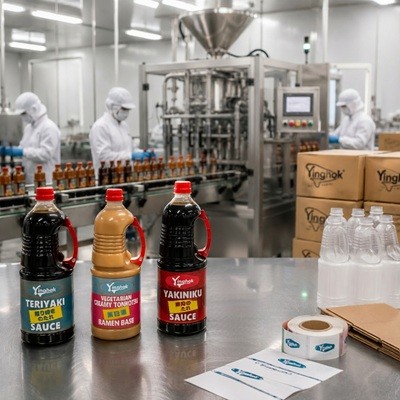
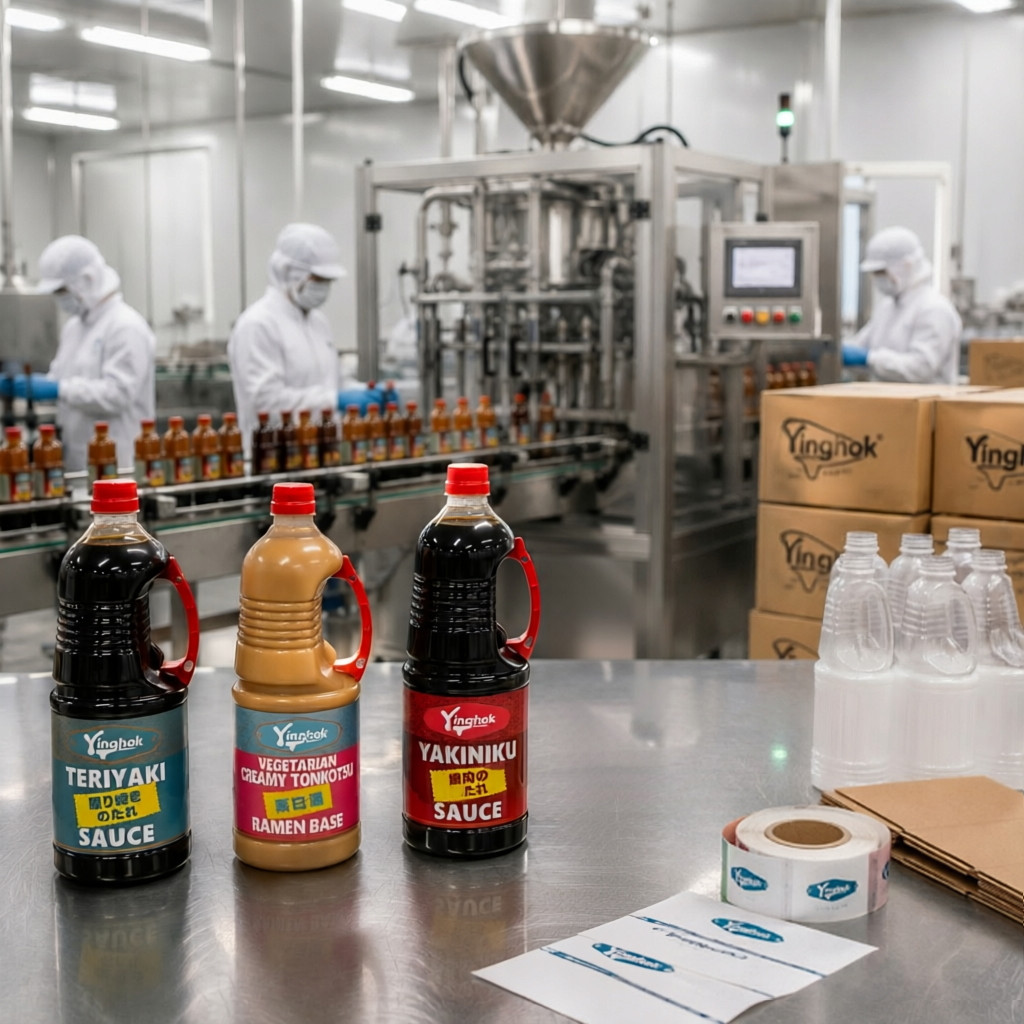
Launching a private label sauce line involves far more than finding a factory that can fill bottles with your logo.
For restaurant groups, foodservice distributors, supermarket brands, importers, and food manufacturers, the right private label sauce manufacturer needs to support the entire supply chain—from formula development and sampling to packaging, quality control, regulatory documentation, production, and export logistics.
A supplier may offer an attractive price but still create problems if its minimum order quantity is too high, its formulation cannot be customized, its documentation is incomplete, or its production cannot maintain consistent quality.
So, how do you find a private label sauce manufacturer that is suitable for long-term B2B cooperation?
This guide provides a practical framework for evaluating sauce manufacturers and explains the key questions buyers should ask before placing a private label order.
1. Start With Your Private Label Sauce Requirements
Before contacting manufacturers, define your purchasing requirements as clearly as possible.
A good supplier evaluation starts with a product brief covering:
· Sauce type and application
· Target flavor profile
· Ingredient requirements
· Salt, sweetness, acidity, or spice level
· Desired viscosity and color
· Packaging format
· Pack size
· Annual or monthly purchasing volume
· Target market
· Required certifications
· Labeling requirements
· Target launch date
For example, a restaurant chain may need a bulk teriyaki sauce with a specific viscosity for grilling, while a supermarket brand may require a retail-ready bottle, customized label, nutrition information, and market-specific regulatory compliance.
If you are still evaluating product categories, Yinghok's Asian sauce manufacturer portfolio covers custom ramen soup bases, noodle sauces, rice bowl sauces, meat and BBQ sauces, salad and kimchi sauces, and other Asian cooking sauces.
Why a Detailed Product Brief Matters
Without clear specifications, different manufacturers may quote products that appear similar but are actually different in:
· Ingredient composition
· Flavor intensity
· Concentration
· Serving or dilution ratio
· Packaging
· Production process
· Shelf-life specification
A detailed brief makes supplier quotations easier to compare.
2. Evaluate the Manufacturer's Product Development and Customization Capabilities
Private label does not always mean custom formulation.
Some suppliers simply place your label on an existing formula. Others can modify an existing sauce or develop an entirely new formula.
For B2B buyers, these are three different levels of customization:
Existing Formula + Private Label
You select an existing sauce and customize:
· Brand name
· Label
· Packaging
· Case configuration
This is usually the simplest route for launching a new product.
Existing Formula + Flavor Adjustment
The manufacturer modifies selected characteristics such as:
· Saltiness
· Sweetness
· Acidity
· Spiciness
· Umami
· Aroma
· Color
· Viscosity
This can be useful when an existing product is close to your target but needs market-specific adjustments.
New Formula Development
The manufacturer develops a new product according to your technical brief.
This is more appropriate when you need:
· A signature restaurant sauce
· A unique retail SKU
· A proprietary flavor
· A specific ingredient profile
· A specialized application performance
Yinghok states that its OEM/ODM services include custom formulation and that its R&D team supports new product development. Its Japanese seasoning program also describes a sample development and flavor optimization stage before quotation and mass production.
3. Check MOQ Before Spending Too Much Time on Development
MOQ—minimum order quantity—is one of the most important commercial factors in private label manufacturing.
A manufacturer may have excellent technical capabilities but still be unsuitable if the MOQ exceeds your realistic sales volume.
Ask whether the MOQ applies to:
· Each SKU
· Each flavor
· Each packaging size
· Each label design
· Each production batch
· Each shipment
Yinghok currently states that its MOQ for most custom Asian cooking sauce orders starts from 25 cartons, while its Japanese seasoning page notes that MOQ can vary by product category. Buyers should confirm the exact MOQ for the selected formula, packaging, and market before approving a project.
Questions to Ask About MOQ
Before requesting a quotation, ask:
-What is the MOQ per SKU?
-Can different flavors be combined in one order?
-Does customized packaging increase the MOQ?
-Is there a lower MOQ for existing formulas?
-What happens if the first order is a trial shipment?
-Are there volume discounts for repeat orders?
For a new private label brand, a flexible MOQ can reduce inventory risk during the market-testing stage.
4. Review Packaging and Private Label Support
A private label sauce project requires more than a finished sauce.
Your manufacturer may need to coordinate:
· Bottle or pouch selection
· Cap and closure
· Label dimensions
· Printing
· Case packaging
· Product coding
· Barcode placement
· Nutrition information
· Ingredient declaration
· Allergen declaration
· Storage instructions
· Country-of-origin information
· Shipping marks
Yinghok states that its private label OEM/ODM service includes packaging design, label creation, and mass production. Its Japanese seasoning program also describes packaging and label design as a formal stage of its customization process.
Packaging Should Match the Sales Channel
A restaurant may need large foodservice containers designed for kitchen efficiency.
A supermarket brand may instead need:
· Consumer-friendly bottles
· Shelf-ready packaging
· Retail cartons
· Barcode-compatible labels
A food manufacturer may require bulk containers or industrial packaging.
Therefore, don't ask only “What bottle sizes do you have?”
Ask:
“Which packaging formats are suitable for my sales channel, distribution model, and expected consumption rate?”
Before approving packaging, it is usually better to approve the sauce itself first.
When requesting samples, provide your intended application and target flavor rather than simply asking for a generic sample. This gives the manufacturer's R&D team more useful information for development.
5. Verify Food Safety Systems and Certifications Carefully
Food safety documentation should be evaluated separately from marketing claims.
HACCP
The FDA describes HACCP as a management system that addresses biological, chemical, and physical hazards through analysis and control across the food chain. Its principles include hazard analysis, critical control points, critical limits, monitoring, corrective actions, verification, and record keeping.
When evaluating a manufacturer, ask for evidence of its HACCP system and determine whether it covers the relevant manufacturing site and product scope.
BRCGS
BRCGS Food Safety Issue 9 provides a framework covering product safety, integrity, legality, quality, and operational controls for food and ingredient manufacturing, processing, and packing. Issue 9 was published on August 1, 2022, and remains the relevant published issue while BRCGS continues its revision process.
If BRCGS certification is important to your purchasing policy, ask for:
· Current certificate
· Certification body
· Site covered
· Scope of certification
· Expiration date
Do not treat a supplier's statement that it is "BRC compliant" as automatically equivalent to current third-party certification.
ISO
"ISO certified" is too vague for a purchasing specification.
For food manufacturing, buyers may encounter ISO 22000, which specifies requirements for a food safety management system. ISO states that ISO 22000:2018 remains current following its 2023 review; ISO itself does not perform certification, which is carried out by independent certification bodies.
Therefore, ask:
Which ISO standard? Which site? What is the certificate scope? Who issued the certificate?
Halal
If your target market requires Halal products, request a current Halal certificate and verify:
· Certifying organization
· Certified product
· Manufacturing site
· Certificate validity
· Scope
Do not assume that every product from a manufacturer is automatically covered by the same Halal certification.
Yinghok's website currently lists HACCP, Halal, FDA, and BRC among its product/company compliance attributes. Because certification scope can vary by facility, product, and market, B2B buyers should request the current supporting documents for the specific SKU being purchased.
6. Examine Quality Control, Specifications, and Batch Consistency
A private label sauce becomes part of your brand.
If one production batch tastes noticeably different from another, the problem ultimately affects your customers—not just the factory.
Ask the manufacturer how it controls:
Raw Materials
· Supplier qualification
· Ingredient specifications
· Incoming inspection
· Traceability
Production
· Formula control
· Batch records
· Process parameters
· Sanitation procedures
· Critical control points where applicable
Finished Product
Depending on the product, relevant checks may include:
· Sensory characteristics
· Physical properties
· Chemical parameters
· Microbiological testing
· Packaging integrity
· Label verification
FDA HACCP guidance emphasizes that hazard analysis should consider ingredients, processing steps, storage, distribution, intended use, and consumers. It also emphasizes documented monitoring, corrective action, verification, and record keeping.
Request the Product Specification
Before placing a commercial order, ask for a written specification covering the exact SKU.
This may include:
· Product name
· Ingredient statement
· Allergen information
· Nutrition information
· Physical/chemical specifications
· Microbiological criteria
· Packaging
· Net weight
· Storage conditions
· Shelf-life specification
· Lot coding
7. Treat Shelf Life and Storage as Product-Specific Specifications
Do not assume that every sauce has the same shelf life.
Shelf life depends on factors such as formulation, processing, packaging, storage conditions, and the intended distribution environment.
For example, Yinghok's published product pages show different shelf-life specifications for individual ramen products: its Shoyu Ramen Soup page lists 12 months, while its Tonkotsu Ramen Soup (Dark) page lists 18 months. These are product-specific published specifications and should not be generalized to every Yinghok sauce or to a new private-label formula.
For a private label project, ask the manufacturer to confirm:
· Shelf life of the exact formula
· Storage conditions
· Whether the shelf life applies before or after opening
· Packaging assumptions used in the specification
· Recommended distribution conditions
Always follow the finished product label, applicable local regulations, and qualified food-safety advice for the target market.
8. Confirm Labeling and Allergen Requirements for Your Target Market
A private label manufacturer should help provide technical information, but the importer or brand owner remains responsible for ensuring that the final product meets the laws applicable to the market where it is sold.
For U.S. packaged foods, FDA's current allergen guidance identifies nine major food allergens: milk, egg, fish, crustacean shellfish, tree nuts, wheat, peanuts, soybeans, and sesame. FDA states that the source of major food allergens used in the food must be identified on labels under applicable U.S. requirements. The current FDA allergen guidance was issued in January 2025.
This is particularly relevant to Asian sauces because common ingredients can include:
· Soy
· Wheat
· Sesame
· Fish
· Shellfish
· Milk or other derived ingredients in certain formulations
Ask the manufacturer for the current ingredient and allergen documentation for the exact formula.
Do not copy an old label from another market and assume it is legally acceptable in your destination country.
9. Assess Sample Development Before Mass Production
A strong private label project should have a defined approval process.
A practical workflow is:
Requirement brief → Formula/sample development → Sample evaluation → Formula confirmation → Packaging/label approval → Pilot or production confirmation → Mass production → QC release → Shipment
Yinghok's published OEM/ODM process describes consultation, sample development and flavor optimization, quotation and contract, packaging/label design, mass production and quality control, followed by delivery and after-sales support.
During sample evaluation, don't judge only whether the sauce "tastes good."
Test it in the actual application:
· Grill it
· Dilute it
· Mix it with noodles
· Use it as a marinade
· Test it with your target protein
· Evaluate after cooking
· Test the intended serving size
A sauce that tastes excellent directly from the bottle may perform differently after heating or dilution.
Send the manufacturer your application, target flavor, packaging requirement, expected volume, and target market so the sample can be evaluated against a commercial specification.
10.Evaluate Bulk Supply and Export Coordination
A manufacturer may successfully produce samples but still need to demonstrate that it can support your commercial purchasing process.
For bulk orders, clarify:
· Production lead time
· Order confirmation process
· Production scheduling
· Batch documentation
· Carton configuration
· Palletization
· Loading method
· Export documents
· Port of shipment
· Payment terms
· Shipping responsibilities
· Claims and non-conformance procedures
Yinghok's product pages identify Dalian Port as an FOB port for certain products and describe global logistics support within its OEM/ODM process. These details should still be reconfirmed for the specific SKU, order, and destination market before contracting.
For importers and distributors, export coordination is particularly important because a competitively priced sauce is not commercially useful if documentation or shipping arrangements are incomplete.
Provide your destination market, estimated order quantity, preferred packaging, and required delivery timeline to receive a project-specific quotation.
11.Use a Supplier Evaluation Checklist Before Making a Decision
A simple comparison matrix can help procurement teams avoid choosing a supplier based solely on price.
Evaluation Area | Questions to Ask |
Product | Can the manufacturer produce the required sauce category? |
Formula | Can the flavor, salt, sweetness, acidity, or viscosity be customized? |
MOQ | What is the MOQ per SKU and packaging format? |
Samples | Is pre-production sample approval available? |
Packaging | Can bottles, pouches, cartons, and labels be customized? |
Quality | What specifications and batch-control procedures are provided? |
Food Safety | Which HACCP, BRCGS, ISO, or other certifications apply? |
Halal | Is the exact product covered by a current Halal certificate? |
Labeling | Can the manufacturer provide ingredient, allergen, and nutrition data? |
| Shelf Life | What is the validated shelf life for the exact formula and package? |
Production | What is the standard lead time after approval? |
| Export | Can the supplier provide the required export documentation? |
| Supply | Can production scale with your projected demand? |
| Communication | Is there a clear contact for R&D, QC, packaging, and logistics? |
This approach makes supplier comparison more objective and helps purchasing teams identify hidden costs before signing a contract.
12. Why Yinghok May Be Relevant to a Private Label Sauce Project
Yinghok positions itself as an OEM/ODM Asian sauce manufacturer serving restaurants, foodservice businesses, distributors, retailers, and food manufacturers. Its website states that the company has more than two decades of Asian sauce production experience and offers customized formulations and private label services.
Its product portfolio includes multiple categories, including:
· Custom Ramen Soup Bases
· Custom Noodle Sauces & Bases
· Custom Rice Bowl Sauces
· Custom Meat & BBQ Sauces
· Custom Salad & Kimchi Sauces
· Custom Japanese Seasonings
For buyers developing a Japanese or Asian private label range, the custom ramen soup base supplier category is relevant for ramen products, while custom Japanese seasonings cover products such as rice vinegar, mirin, and cooking sake.
For broader restaurant and distribution projects, Yinghok's foodservice sauce supplier portfolio provides access to multiple Asian sauce categories through one OEM/ODM program.
Planning a New Sauce Line?
Finding a private label sauce manufacturer should be treated as a supplier qualification project, not simply a price comparison.
The strongest candidate is the manufacturer that can align your:
formula + specifications + MOQ + packaging + labeling + food safety documentation + quality control + production schedule + export requirements
before you commit to a long-term supply relationship.
If you are developing a new Asian sauce, Japanese seasoning, ramen product, or private label foodservice range, Yinghok can discuss your product requirements, sample development, MOQ, packaging, and bulk supply options.
Request a Sauce Sample with your target application and flavor profile, or Ask About MOQ and Packaging Options before starting your private label project.
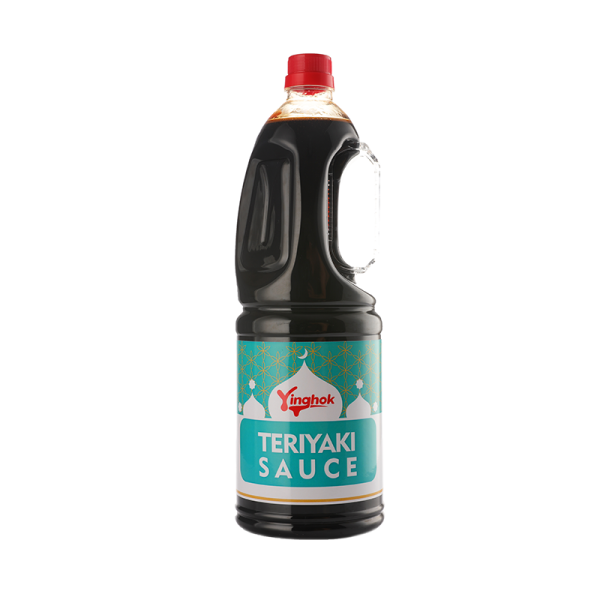
Halal certified teriyaki sauce with smooth flavor, ideal for halal catering and various cooking needs.
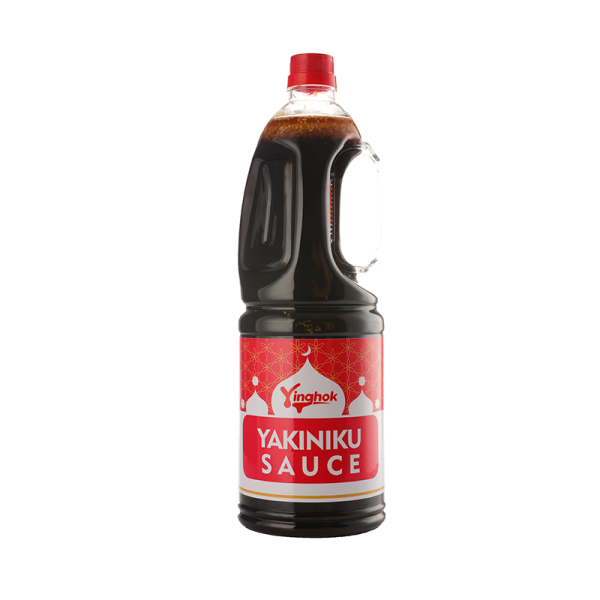
Halal certified yakiniku sauce with rich, well-balanced taste, perfect for halal grilling and catering services.
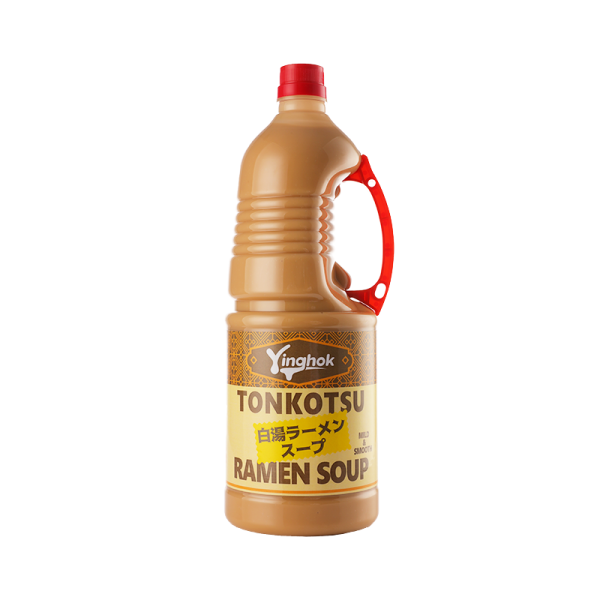
The tonkotsu ramen soup is the soul of Japanese tonkotsu ramen, rich, mellow and delicious without being greasy.
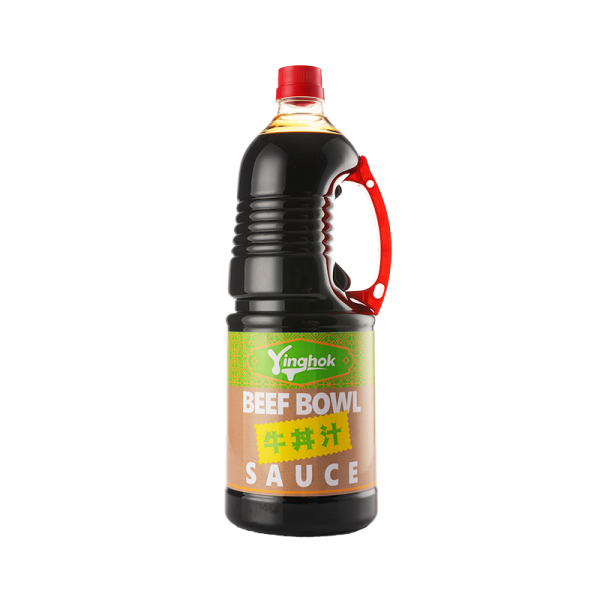
Savory beef bowl sauce with rich umami flavor, perfect for large‑scale restaurant beef bowl preparation.