Blog
All
Asian Sauces Knowledge
Custom Asian Cooking Sauces Recipe
Custom Sushi Sauces Recipe
Custom Chinese Cooking Sauce Recipe

All

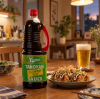
Custom Sushi Soy Sauce OEM: MOQ, Certifications & Lead Time

A B2B purchase-decision guide to custom sushi soy sauce OEM. Compare published MOQ reference terms (30 cartons standard / 50 cartons custom, plus a 25-50 carton wholesale range), verify HACCP, BRCGS, FDA and BPJPH/JAKIM Halal certificate scope, and separate the 2-3 week development timeline from per-order production and shipping. Includes a quick-reference table, a three-route comparison, a procurement checklist, six buyer FAQs and links to the sushi sauce product groups.

Nov 14,2026
Custom Sushi Soy Sauce OEM: MOQ, Certifications & Lead Time

How Do You Choose a Custom Ramen Soup Base Manufacturer? A B2B Buyer's Qualification Guide

A buyer-side qualification guide to custom ramen soup base manufacturers: format and concentration choice, how to read a specification sheet, running a sample trial that predicts production, the 35-45 day lead time counted from approved artwork, and which compliance documents to verify.

Nov 13,2026

How Do You Choose a Custom Ramen Soup Base Manufacturer? A B2B Buyer's Qualification Guide

Bulk Asian Sauces for Central Kitchens: What Should Buyers Consider?

Discover what central kitchens should consider when sourcing bulk Asian sauces. This guide covers sauce selection, recipe specifications, flavor consistency, packaging formats, MOQ, quality control, food safety, inventory planning, and export coordination. Learn how to evaluate commercial sauce suppliers and build a reliable bulk purchasing plan for multi-location foodservice operations.

Nov 8,2026

Bulk Asian Sauces for Central Kitchens: What Should Buyers Consider?

Custom Salad & Kimchi Sauce Sourcing: How to Audit an OEM Supplier Before the First Pallet

A sourcing guide for buyers evaluating a custom salad and kimchi sauce partner: why a live fermented sauce behaves differently from a stable condiment in bulk, a factory audit checklist, fermented chilli sauce versus emulsion dressing control points, what batch-to-batch consistency means, pack format and a 35-45 day lead time, OEM versus ODM scope, and first-90-day launch failures.

Nov 7,2026

Custom Salad & Kimchi Sauce Sourcing: How to Audit an OEM Supplier Before the First Pallet

How to Choose the Right Ramen Soup Base for a Restaurant Chain

Learn how restaurant chains can select ramen soup bases, compare broth types, control servicing costs, and evaluate wholesale suppliers.

Oct 31,2026

How to Choose the Right Ramen Soup Base for a Restaurant Chain

Custom Salad & Kimchi Sauce Manufacturer: How to Specify Fermentation Stability Before You Order

A formulation and specification guide for buyers working with a custom salad and kimchi sauce manufacturer: why kimchi sauce fails at the operator's bench rather than in the recipe, the three parameters to pin in writing (acidity, salt, viscosity at two temperatures), how retail private label and foodservice kimchi sauce differ, where emulsion dressings fit on the same line, a five-step bench test before a bulk order, and a seven-line purchase specification that survives an audit.

Oct 30,2026

Custom Salad & Kimchi Sauce Manufacturer: How to Specify Fermentation Stability Before You Order

Japanese BBQ Sauces: A Buying Guide by Cooking Role

Japanese BBQ sauces split into grill glazes (teriyaki, yakiniku, yakitori) and table sauces (unagi, tonkatsu, takoyaki, black pepper). This guide explains how to specify viscosity, sugar content and packaging for each role, with MOQ at 30 cartons and a 15-day lead time.

Oct 24,2026

Japanese BBQ Sauces: A Buying Guide by Cooking Role

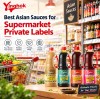
Best Asian Sauces for Supermarket Private Labels: A B2B Buyer's Guide

Explore Asian sauces for supermarket private labels, with guidance on product selection, customization, MOQ, packaging, food safety and bulk supply.

Oct 17,2026

Best Asian Sauces for Supermarket Private Labels: A B2B Buyer's Guide

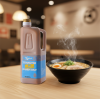
Liquid Ramen Soup Base: An Authoritative Guide for B2B Buyers

A professional, product-focused guide to liquid ramen soup bases — how they work, the core broth families (tonkotsu, shoyu, miso, chicken bone, curry, tomato, jigoku), certifications, dilution and cost per bowl, and how to develop a custom base for foodservice, retail, and food manufacturing.

Oct 14,2026

Liquid Ramen Soup Base: An Authoritative Guide for B2B Buyers

Tonkotsu vs. Miso vs. Shoyu vs. Shio: A B2B Guide to Ramen Soup Base Types

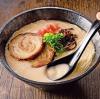
A B2B comparison of the four ramen soup base families — tonkotsu, miso, shoyu, and shio — covering flavor profile, cost per bowl, supply stability, format (concentrate vs powder vs paste), and customization options for importers, distributors, and chain restaurants.

Oct 14,2026

Tonkotsu vs. Miso vs. Shoyu vs. Shio: A B2B Guide to Ramen Soup Base Types

What's the True Difference Between Sushi Vinegar and Rice Vinegar?

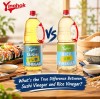
The distinction between sushi vinegar and standard rice vinegar is fundamental to Japanese cuisine, with the latter being a basic ingredient and the former a specialized seasoning. Rice vinegar, known as *komezu*, is a foundational, versatile ingredient produced through a two-stage fermentation of rice, resulting in a mild, mellow vinegar typically with 4-5% acidity. Its subtle sweetness and umami notes are crucial for balancing flavors without overpowering dishes.

Oct 10,2026

What's the True Difference Between Sushi Vinegar and Rice Vinegar?

Rice Vinegar vs. Grain Vinegar for Sushi & Food Manufacturing: A B2B Comparison

A B2B comparison of rice vinegar vs grain vinegar for sushi and food manufacturing: raw materials, acidity, aroma, behaviour in sushi rice and processed foods, cost and shelf-life trade-offs, blending strategies and bulk sourcing checklists for importers, sushi chains and private label brands.

Sep 23,2026

Rice Vinegar vs. Grain Vinegar for Sushi & Food Manufacturing: A B2B Comparison

How Cooking Sake Improves Umami and Removes Odors: A Technical Guide for Food Manufacturer

A technical B2B guide to how cooking sake improves umami and removes odors in commercial food production: the umami mechanism, deodorising chemistry, key specification parameters, dosage and timing, applications across sauces and ready meals, sourcing checklists and FAQs. Written for food manufacturers, sauce producers and Japanese food brands sourcing custom Japanese seasonings.

Sep 23,2026

How Cooking Sake Improves Umami and Removes Odors: A Technical Guide for Food Manufacturer

OEM vs. Private Label Sauces: What Is the Difference?

Learn the differences between OEM and private label sauces, including customization, MOQ, packaging, QC, certification and bulk supply.

Sep 17,2026

OEM vs. Private Label Sauces: What Is the Difference?